

Monoclonal Antibodies Market Overview and Key Insights:
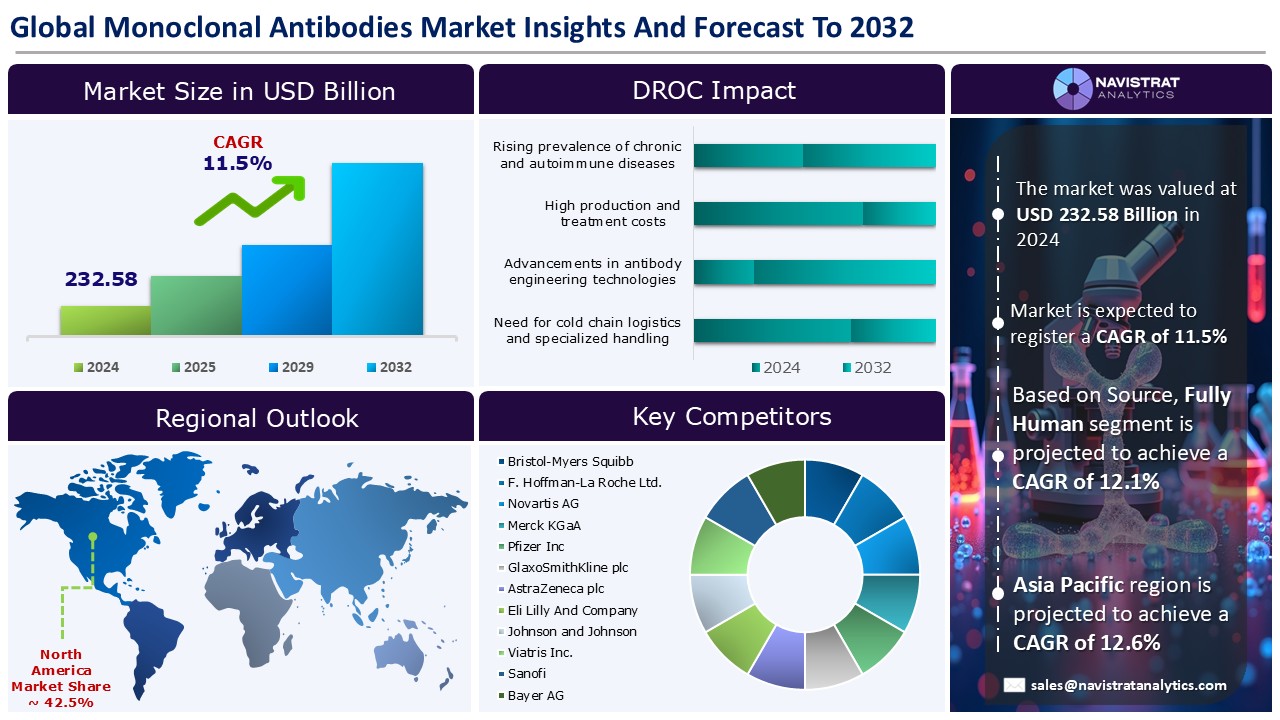
The monoclonal antibodies market size reached USD 232.58 billion in 2024 and is expected to register a revenue CAGR of 11.5% during the forecast period. Monoclonal antibodies (mAbs) are immunoglobulins generated from a monoclonal cell line with a predetermined specificity. Their immunological activity is based on binding to a specific ligand or antigen, but they may also rely on additional effector functions.
Market Drivers:
Rising prevalence of chronic and autoimmune diseases is a key driver of revenue growth in the monoclonal antibodies market. According to the World Health Organization (WHO), rheumatoid arthritis affects around 18 million people globally. The prevalence rate is under 1% and rises with age, peaking between the ages of 35 and 50 years. RA affects all populations; however, it is substantially more widespread communities (for example, 5-6% in some Native American groups). Those identified as female at birth are roughly three times more likely to be affected than those assigned male.
Increased investment in biologics R&D is another key driver driving the market revenue growth over the forecasted period. Recent breakthroughs in production culture titers, ongoing optimization of upstream and downstream processing platforms, and increased global manufacturing capacity may open potential for mAb therapeutics in new therapeutic areas, as well as enhanced global access to LMICs.
On November 2024, Sanofi invested Euro 1 billion to create a new facility that will increase the site’s monoclonal antibody production capability. Sanofi is developing several biologics, including 12 potential blockbusters for chronic obstructive pulmonary disorder (COPD), asthma, multiple sclerosis, and type 1 diabetes, and may manufacture them in Vitry to meet the needs of millions of patients in France and around the world. Sanofi expects to create 350 jobs because of this investment.
Market Opportunity:
Advancements in antibody engineering technologies acts as an opportunity for the monoclonal antibodies market. Therapeutic antibody technology dominates the biologics market and has sparked enormous industrial interest in creating novel and enhanced antibody treatment techniques. Researchers engineered these antibodies as part of efforts to discover new therapeutic drugs with enhanced immune-protective features, including the ability to activate immune effector functions, facilitate the development of fusion proteins, penetrate tumors and tissues efficiently, and exhibit high affinity for conserved targets.
On August 2024, the United States Food and Drug Administration (US FDA) took historic stride toward public health by replacing animal testing in the development of monoclonal antibody treatments and other medications with more effective, human-relevant procedures. The new strategy aims to improve drug safety and speed up the evaluation process while reducing animal experiments, R&D expenditures, and, eventually, drug pricing.
Recent Trends:
Emerging trends include bispecific and multispecific antibodies, Antibody-Drug Conjugates (ADCs), Artificial Intelligence (AI) and machine learning in antibody discovery, and next-generation antibody technologies.
Advances in artificial intelligence (AI) have the potential to accelerate and improve the discovery process. Early stage biotechs have attracted a growing list of big pharmaceutical corporations to collaborate on the development of next-generation antibody therapeutics. For example, in December 2023, AstraZeneca and AbbVie inked collaboration agreements with Absci and BigHat Biosciences that might be worth more than USD 200 million each. In each transaction, the goal is to combine the biotech company’s AI-driven antibody design platform with the pharma company’s biologics expertise to accelerate the development of new antibody therapies.
Restraints & Challenges:
Monoclonal antibody therapy has various drawbacks, including restricted availability and accessibility, high cost, the requirement for early intervention, the risk of resistance and mutation, and the possibility of side effects. These characteristics may make it harder for some people to undergo treatment and attain the best results.
Other problems include the potential of cross-contamination of various cell lines, the synthesis of endogenous immunoglobulin chains, the cell line’s genetic instability, and the consistency of heavy and light chain expression. During mAb production, it is also difficult to generate equal amounts of both heavy and light chains in the production cell lines, as chain imbalances can be toxic to cells or result in non-functional immunoglobulin chains in the supernatant, complicating the purification process.
Source Segment Insights and Analysis:
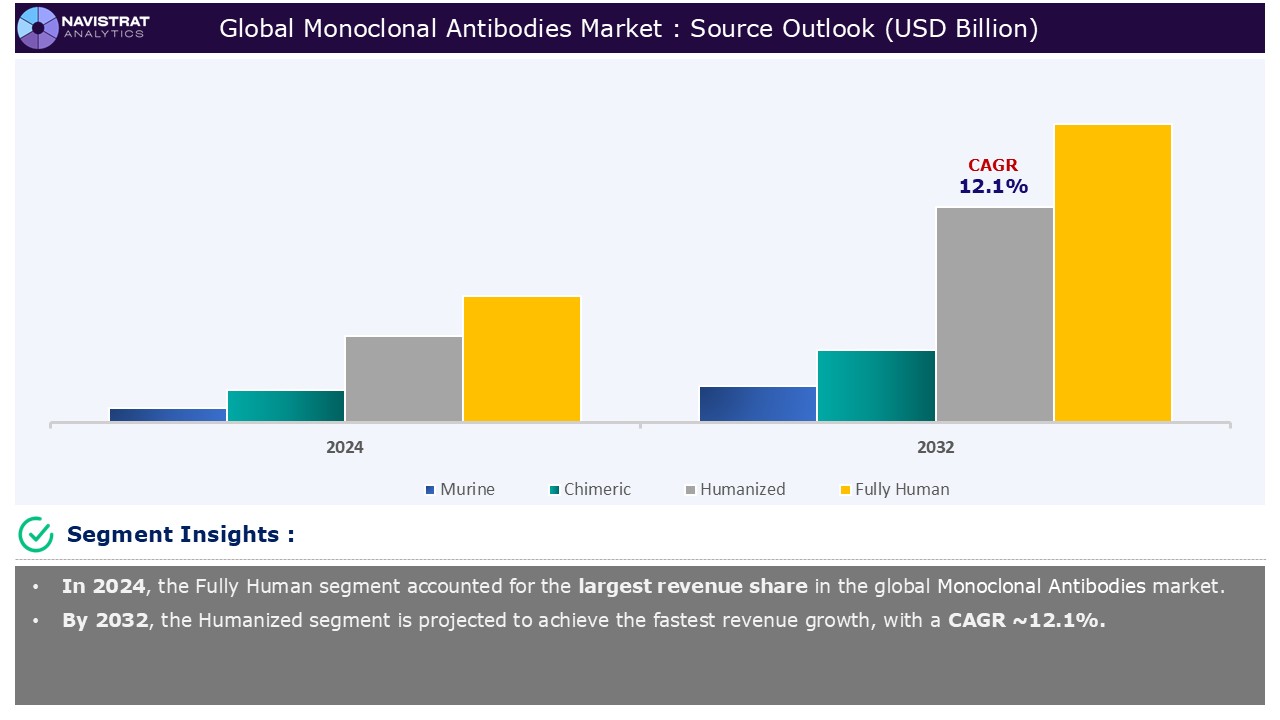
Based on the source, the monoclonal antibodies market is segmented into murine, chimeric, humanized, and fully human.
Fully human segment contributed the largest market share in 2024. Fully human mAbs are generated from transgenic mice with human immunoglobulin genes. Transgenic mice provide a distinct benefit by introducing a humanized immune system environment. This permits antibodies to undergo natural immunological diversification and selection, like what occurs in the human body, resulting in highly effective antibodies appropriate for therapeutic application due to their high affinity and low immunogenicity.
On September 2023, Biocytogen Pharmaceuticals Co., Ltd. has officially launched the RenMice line, which consists of independently created, fully human antibody mice and TCR mice with proprietary intellectual property. RenMice includes five strains of completely human antibody/TCR mice: RenMab, RenLite, RenNano, RenTCR, and RenTCR-mimic. These mice provide strong support for the identification of fully human monoclonal antibodies, bispecific antibodies, BsADCs, nanobodies, fully human T-cell receptors (TCRs), and TCR-mimic antibodies.
Humanized segment is expected to have the highest growth rate throughout the forecasted period. Recent advances in prediction algorithms and deep learning models, such as Rosetta, attempt to improve the humanization process using large and diverse antibody sequence libraries. Several firms, like MAbSilico, PipeBio, and ENPICOM, have created their own platforms to expedite antibody humanization efforts by calculating attributes including immunogenicity, specificity, affinity, and manufacturability. Approaches like as Hu-mAb have improved humanness scoring by attaining high classification accuracy in discriminating between human and non-human sequences and linking greater humanness ratings with decreased immunogenicity.
On March 2025, Biointron has launched a fast antibody discovery platform. Introducing Biointron AbDrop with Cyagen HUGO-Ab, a revolutionary high-throughput fully humanized antibody discovery platform. This unique strategy combines microfluidic technology for single B cell antibody discovery with completely human antibody mice to create a safer and more efficient way to fully human antibody discovery, which can be completed in as little as three months.
Application Segment Insights and Analysis:
Based on the application, the monoclonal antibodies market is segmented into oncology, autoimmune diseases, infectious diseases, cardiovascular diseases, neurological diseases, hematological disorders, and others.
Oncology segment contributed the largest market share in 2024. Oncology is sub-segmented into breast cancer, lung cancer, colorectal cancer, leukemia, lymphoma, and others. According to the National Breast Cancer Foundation, in the United States, doctors diagnose one out of every eight women with breast cancer during her lifetime. In 2025, estimates that 316,950 women and 2,800 men will receive a diagnosis of invasive breast cancer, while healthcare providers will detect another 59,080 new cases of non-invasive (in situ) breast cancer. Currently, more than 4 million breast cancer survivors live in the United States. In 2025, breast cancer is expected to claim the lives of 42,170 women in the country.
On January 2025, Enhertu (trastuzumab deruxtecan) from AstraZeneca and Daiichi Sankyo has been approved in the United States for the treatment of adult patients with unresectable or metastatic hormone receptor (HR)-positive, HER2-low (IHC 1+ or IHC 2+/ISH-) or HER2-ultralow (IHC 0 with membrane staining) breast cancer, as determined by a Food and Drug Administration (FDA)-approved test, who have progressed on one or more endocrine therapies in the metastatic setting. Enhertu is made up of a HER2 monoclonal antibody linked to a variety of topoisomerase I inhibitor payloads (an exatecan derivative, DXd) using tetrapeptide-based cleavable linkers.
Production Type Segment Insights and Analysis:
Based on the product type, the monoclonal antibodies market is segmented into in vitro and ex vivo.
In vitro segment contributed the largest market share in 2024. In vitro antibody synthesis techniques have transformed therapeutic applications, particularly the creation of monoclonal antibody (mAb) therapeutics. Furthermore, antibodies produced in vitro can be designed to form antibody-drug conjugates, allowing medications to be delivered to specific cells with precision. This method improves therapeutic efficacy while reducing the risks associated with traditional systemic medication administration. Furthermore, in vitro approaches enable the generation of bispecific and multispecific antibodies. These novel antibodies have two or more specificities, allowing them to target different antigens or cells at the same time.
On October 2023, Vir Biotechnology, Inc. announced that the Biomedical Advanced Research and Development Authority (BARDA), part of the US Department of Health and Human Services’ (HHS) Administration for Strategic Preparedness and Response (ASPR), has awarded Vir approximately USD 50 million in new funding to advance the development of novel monoclonal antibody (mAb) candidates and delivery solutions to broaden the applicability of mAbs in COVID-19 and pandemic preparedness and response.
Geographical Outlook:
Monoclonal antibodies market is strategically segmented by geography to provide a comprehensive understanding of regional market dynamic. Discover demand analysis, emerging trends, and growth opportunities shaping market performance across different region and countries.
North America Monoclonal Antibodies Market:
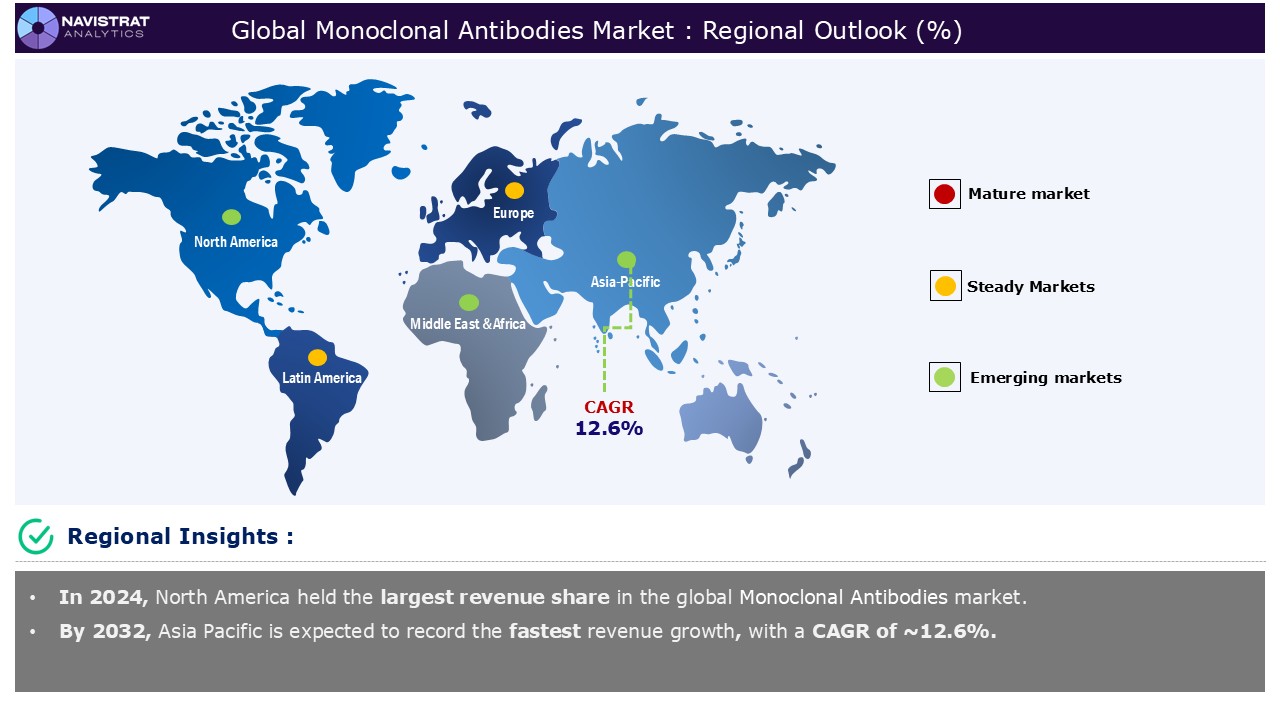
North America is registered to have largest market share in monoclonal antibodies market in 2024. This is mainly due to the rising prevalence of chronic and autoimmune diseases, strong clinical efficacy, and specificity of mAbs, and increasing applications of mAb therapies for targeted therapies. According to the National Centre of Biotechnology (NCBI), multiple sclerosis is the most common immune-mediated, inflammatory demyelinating disease of the central nervous system. This illness affects around 400,000 people in the United States and 2.5 million people worldwide. Although beginning usually occurs between the ages of 20 and 40, multiple sclerosis can occur at any age, with the average age of onset being 25 to 29 for relapsing-remitting multiple sclerosis and 39 to 41 for main progressive multiple sclerosis.
On February 2024, AbbVie Inc. and OSE Immunotherapeutics SA, a clinical-stage immunotherapy firm, announced a strategic collaboration to develop OSE-230, a monoclonal antibody targeted to treat chronic and severe inflammation that is presently in pre-clinical development. OSE-230 is a first-in-class monoclonal antibody that activates ChemR23, a GPCR target. ChemR23 activation may provide a unique strategy for resolving chronic inflammation by altering macrophage and neutrophil activity.
Asia Pacific Monoclonal Antibodies Market:
Asia Pacific is registered the fastest growth rate during the forecasted period. The region is boosted by rising healthcare infrastructure, increase in patient population, and technological advancements in antibody technology. Regulatory agencies in the region are also changing to handle the difficulties and opportunities posed by monoclonal antibodies, creating a climate that promotes their development and commercialization. Furthermore, corporations are looking for novel therapeutic targets and investing in cutting-edge technologies such as AI-powered antibody technology.
On February 2025, CSL Behring K.K. stated that the Japanese Ministry of Health, Labour, and Welfare (MHLW) has granted manufacturing and marketing approval for ANDEMBRY (garadacimab) Subcutaneous (S.C.) Injection 200mg Pens. The clearance in Japan follows recent approvals in Australia, the United Kingdom, and the European Union. Japanese researchers developed ANDEMBRY as the first fully human monoclonal antibody in Japan to inhibit activated Factor XII (Factor XIIa), a key initiator of the cascade that causes angioedema in various parts of the body.
Europe Monoclonal Antibodies Market:
Europe is to register a considerable market share during the forecasted period. This is mainly driven by increased investment in biologics R&D and strong clinical efficacy and specificity of mAbs. Furthermore, approval and launch of novel therapeutics is also augmenting the growth of the market in the region. For instance, on March 2023, BioNTech SE and OncoC4, Inc., a clinical-stage biopharmaceutical company dedicated to the discovery and development of novel biologicals for cancer treatment, announced that they have signed an exclusive worldwide license and collaboration agreement to develop and commercialize ONC-392, OncoC4’s next-generation anti-CTLA-4 monoclonal antibody candidate, as monotherapy or combination therapy in a variety of cancer indications. The acquisition is expected to close in the first half of 2023, pending customary closing conditions and regulatory clearances.
Competition Analysis:
The monoclonal antibodies market is characterized by a fragmented structure, with several players competing across various segments and regions. List of major players included in the monoclonal antibodies market report are:
- Bristol-Myers Squibb
- Hoffman-La Roche Ltd.
- Novartis AG
- Merck KGaA
- Pfizer Inc
- GlaxoSmithKline plc
- AstraZeneca plc
- Eli Lilly And Company
- Johnson and Johnson
- Viatris Inc.
- Sanofi
- Bayer AG
- Daiichi Sankyo Company, Limited
- Amgen Inc.
- Biogen
Strategic Developments in Monoclonal Antibodies Market:
- In January 2025, Astellas Pharma Canada Inc. has announced that Health Canada has approved VYLOY (zolbetuximab for injection). Regulators have approved the drug for use with fluoropyrimidine- and platinum-based chemotherapy as a first-line treatment for adults who have locally advanced, unresectable, or metastatic HER2-negative gastric or gastroesophageal junction (GEJ) adenocarcinoma. The treatment targets patients whose tumors express claudin (CLDN) 18.2, as confirmed by a validated diagnostic test.
- In May 2024, Boehringer Ingelheim and OSE Immunotherapeutics SA (OSE), a clinical-stage biotech business, have announced a significant expansion of their relationship. OSE Immunotherapeutics will receive an upfront payment of EUR 13.5 million and a potential near-term milestone of EUR 17.5 million for the acquisition of a unique, cis-targeting anti-PD-1/cytokine asset in preclinical development.
- In June 2024, Biocon Biologics Ltd, a global biosimilars company and subsidiary of Biocon Ltd, has secured approval from the European Medicines Agency (EMA) to produce biosimilar Bevacizumab at its new state-of-the-art, multi-product monoclonal antibody (mAbs) drug substance facility in Bangalore. This milestone will substantially expand the company’s manufacturing capacity to better serve patient needs across European markets.
Key Advantages for Stakeholders:
Navistrat Analytics’ industry report provides an in-depth quantitative analysis of various market segments, historical and current trends, market forecasts, and dynamics within the global market. The historical years covered in this report are 2022 to 2023, with 2024 serving as the base year for market size calculations. The forecast period extends from 2025 to 2032.
The report includes an executive summary and a comprehensive overview of market drivers, restraints, opportunities, and challenges (DROC), along with insights into regulatory standards. It features detailed analyses such as PORTER’s Five Forces, SWOT, and PESTLE, as well as assessments of technological trends and the competitive landscape.
PORTER’s Five Forces analysis helps stakeholders evaluate the impact of new entrants, competitive rivalry, supplier power, buyer power, and substitution threats, enabling them to assess the level of competition and the attractiveness of the global market. The competitive landscape provides stakeholders with a clear understanding of the current market positions of key players, offering valuable insights into their competitive environment.
Scope And Key Highlights of the Monoclonal Antibodies Market Report:
| Report Features | Details |
| Market Size in 2024 | USD 232.58 Billion |
| Market Growth Rate in CAGR (2025–2032) | 11.5% |
| Market Revenue forecast to 2032 | USD 558.26 Billion |
| Base year | 2024 |
| Historical year | 2022-2023 |
| Forecast period | 2025-2032 |
| Report Pages | 450 |
| Segments covered |
|
| Regional scope |
|
| Country Scope |
|
| Key Market Players |
|
| Delivery Format | Reports are delivered in PDF format via email. |
| Customization scope | Request for Customization |
The Monoclonal Antibodies market report offers a detailed analysis of market size, including historical revenue (in USD Billion) data for 2022-2023 and revenue forecasts for 2025-2032 across the following segments:
- Source Outlook (Revenue, USD Billion; 2022-2032)
- Murine
- Chimeric
- Humanized
- Fully Human
- Production Type Outlook (Revenue, USD Billion; 2022-2032)
- In Vitro
- Ex Vivo
- Application Outlook (Revenue, USD Billion; 2022-2032)
- Oncology
- Breast Cancer
- Lung Cancer
- Colorectal Cancer
- Leukemia
- Lymphoma
- Others
- Autoimmune Diseases
- Rheumatoid Arthritis
- Psoriasis
- Crohn’s Disease
- Multiple Sclerosis
- Others
- Infectious Diseases
- Cardiovascular Diseases
- Neurological Diseases
- Hematological Disorders
- Others
- Oncology
- End-Use Outlook (Revenue, USD Billion; 2022-2032)
- Hospitals
- Specialty Clinics
- Research & Academic Institutes
- Pharmaceutical & Biotechnology Companies
- Regional Outlook (Revenue, USD Billion; 2022-2032)
- North America
- U.S.
- Canada
- Mexico
- Europe
- Germany
- France
- U.K.
- Italy
- Spain
- Benelux
- Nordic Countries
- Rest of Europe
- Asia Pacific
- China
- India
- Japan
- South Korea
- Oceania
- ASEAN Countries
- Rest of APAC
- Latin America
- Brazil
- Rest of LATAM
- Middle East & Africa
- GCC Countries
- South Africa
- Israel
- Turkey
- Rest of MEA
- North America
Frequently Asked Questions (FAQ) about the Monoclonal Antibodies market report
The market size of monoclonal antibodies market was 232.58 billion in 2024.
The market size of monoclonal antibodies market is expected to register compound annual growth rate (CAGR) of 11.5% over the forecast period.
Rising prevalence of chronic and autoimmune diseases, increased investment in biologics R&D, and strong clinical efficacy and specificity of mAbs are major key factors driving the market revenue growth of the monoclonal antibodies market.
High production and treatment costs and complex manufacturing and supply chain requirements are key limiting factors driving the market.
Asia Pacific account for fastest revenue growth of 12.6%.
Fully human is the major leading segment of monoclonal antibodies market in terms of source.
- Market Definition
- Research Objective
- Research Methodology
- Research Design
- Data Collection Applications
- Primary
- Secondary
- Market Size Estimation
- Top-down Application
- Bottom-up Application
- Forecasting Methodology
- Tools and Models Used
- Market Overview and Trends
- Market Size and Forecast
- Industry Analysis
- Market Driver, Restraints, Opportunity, and Challenges (DROC) Analysis
- Market Drivers
- Rising prevalence of chronic and autoimmune diseases
- Increased investment in biologics R&D
- Strong clinical efficacy and specificity of mAbs
- Increasing applications of mAb therapies for targeted therapies
- Market Restraints
- High production and treatment costs
- Complex manufacturing and supply chain requirements
- Market Opportunities
- Advancements in antibody engineering technologies
- Strategic collaborations and M&A activity among pharma companies
- Market Challenges
- High competition in oncology and autoimmune therapeutic
- Need for cold chain logistics and specialized handling
- Regulatory Landscape
- North America
- Europe
- Asia Pacific
- Latin America
- Middle East and Africa
- Strategic Insights
- Porter’s Five Forces Analysis
- PESTLE Analysis
- Price Trend Analysis
- Value Chain Analysis
- Technological Trends
- Recent Developments
- Funding
- Merger and Acquisition
- Expansion
- Partnership and Collaboration
- Product/ Service Launch
- Source Market Revenue Estimates and Forecasts, 2022-2032
- Murine
- Chimeric
- Humanized
- Fully Human
- Production Type Market Revenue Estimates and Forecasts, 2022-2032
- In Vitro
- Ex Vivo
- Application Market Revenue Estimates and Forecasts, 2022-2032
- Oncology
- Breast Cancer
- Lung Cancer
- Colorectal Cancer
- Leukemia
- Lymphoma
- Others
- Autoimmune Diseases
- Rheumatoid Arthritis
- Psoriasis
- Crohn’s Disease
- Multiple Sclerosis
- Others
- Infectious Diseases
- Cardiovascular Diseases
- Neurological Diseases
- Hematological Disorders
- Others
- Oncology
- End-Use Market Revenue Estimates and Forecasts, 2022-2032
- Hospitals
- Specialty Clinics
- Research & Academic Institutes
- Pharmaceutical & Biotechnology Companies
- Monoclonal Antibodies Market Revenue Estimates and Forecasts by Region, 2022-2032, USD Billion
-
- North America
- North America Monoclonal Antibodies Market By Source, Market Revenue Estimates and Forecasts, 2022-2032, USD Billion
- Murine
- Chimeric
- Humanized
- Fully Human
- North America Monoclonal Antibodies Market By Production Type, Market Revenue Estimates and Forecasts, 2022-2032, USD Billion
- In Vitro
- Ex Vivo
- North America Monoclonal Antibodies Market By Application, Market Revenue Estimates and Forecasts, 2022-2032, USD Billion
- Oncology
- Breast Cancer
- Lung Cancer
- Colorectal Cancer
- Leukemia
- Lymphoma
- Others
- Autoimmune Diseases
- Rheumatoid Arthritis
- Psoriasis
- Crohn’s Disease
- Multiple Sclerosis
- Others
- Infectious Diseases
- Cardiovascular Diseases
- Neurological Diseases
- Hematological Disorders
- Others
- Oncology
- North America Monoclonal Antibodies Market By End-Use, Market Revenue Estimates and Forecasts, 2022-2032, USD Billion
- Hospitals
- Specialty Clinics
- Research & Academic Institutes
- Pharmaceutical & Biotechnology Companies
- North America Monoclonal Antibodies Market Revenue Estimates and Forecasts by Country, 2022-2032, USD Billion
- United States
- Canada
- Mexico
- North America Monoclonal Antibodies Market By Source, Market Revenue Estimates and Forecasts, 2022-2032, USD Billion
- North America
- Europe
- Europe Monoclonal Antibodies Market By Source, Market Revenue Estimates and Forecasts, 2022-2032, USD Billion
- Murine
- Chimeric
- Humanized
- Fully Human
- Europe Monoclonal Antibodies Market By Production Type, Market Revenue Estimates and Forecasts, 2022-2032, USD Billion
- In Vitro
- Ex Vivo
- Europe Monoclonal Antibodies Market By Application, Market Revenue Estimates and Forecasts, 2022-2032, USD Billion
- Oncology
- Breast Cancer
- Lung Cancer
- Colorectal Cancer
- Leukemia
- Lymphoma
- Others
- Autoimmune Diseases
- Rheumatoid Arthritis
- Psoriasis
- Crohn’s Disease
- Multiple Sclerosis
- Others
- Infectious Diseases
- Cardiovascular Diseases
- Neurological Diseases
- Hematological Disorders
- Others
- Oncology
- Europe Monoclonal Antibodies Market By End-Use, Market Revenue Estimates and Forecasts, 2022-2032, USD Billion
- Hospitals
- Specialty Clinics
- Research & Academic Institutes
- Pharmaceutical & Biotechnology Companies
- Europe Monoclonal Antibodies Market Revenue Estimates and Forecasts by Country, 2022-2032, USD Billion
- Germany
- United Kingdom
- France
- Italy
- Spain
- Benelux
- Nordic Countries
- Rest of Europe
- Europe Monoclonal Antibodies Market By Source, Market Revenue Estimates and Forecasts, 2022-2032, USD Billion
- Asia-Pacific
- Asia-Pacific Monoclonal Antibodies Market By Source, Market Revenue Estimates and Forecasts, 2022-2032, USD Billion
- Murine
- Chimeric
- Humanized
- Fully Human
- Asia-Pacific Monoclonal Antibodies Market By Production Type, Market Revenue Estimates and Forecasts, 2022-2032, USD Billion
- In Vitro
- Ex Vivo
- Asia-Pacific Monoclonal Antibodies Market By Application, Market Revenue Estimates and Forecasts, 2022-2032, USD Billion
- Oncology
- Breast Cancer
- Lung Cancer
- Colorectal Cancer
- Leukemia
- Lymphoma
- Others
- Autoimmune Diseases
- Rheumatoid Arthritis
- Psoriasis
- Crohn’s Disease
- Multiple Sclerosis
- Others
- Infectious Diseases
- Cardiovascular Diseases
- Neurological Diseases
- Hematological Disorders
- Others
- Oncology
- Asia-Pacific Monoclonal Antibodies Market By End-Use, Market Revenue Estimates and Forecasts, 2022-2032, USD Billion
- Hospitals
- Specialty Clinics
- Research & Academic Institutes
- Pharmaceutical & Biotechnology Companies
- Asia-Pacific Monoclonal Antibodies Market Revenue Estimates and Forecasts by Country, 2022-2032, USD Billion
- China
- India
- Japan
- South Korea
- Oceania
- ASEAN Countries
- Rest of Asia-Pacific
- Asia-Pacific Monoclonal Antibodies Market By Source, Market Revenue Estimates and Forecasts, 2022-2032, USD Billion
- Latin America
- Latin America Monoclonal Antibodies Market By Source, Market Revenue Estimates and Forecasts, 2022-2032, USD Billion
- Murine
- Chimeric
- Humanized
- Fully Human
- Latin America Monoclonal Antibodies Market By Production Type, Market Revenue Estimates and Forecasts, 2022-2032, USD Billion
- In Vitro
- Ex Vivo
- Latin America Monoclonal Antibodies Market By Application, Market Revenue Estimates and Forecasts, 2022-2032, USD Billion
- Oncology
- Breast Cancer
- Lung Cancer
- Colorectal Cancer
- Leukemia
- Lymphoma
- Others
- Autoimmune Diseases
- Rheumatoid Arthritis
- Psoriasis
- Crohn’s Disease
- Multiple Sclerosis
- Others
- Infectious Diseases
- Cardiovascular Diseases
- Neurological Diseases
- Hematological Disorders
- Others
- Oncology
- Latin America Monoclonal Antibodies Market By End-Use, Market Revenue Estimates and Forecasts, 2022-2032, USD Billion
- Hospitals
- Specialty Clinics
- Research & Academic Institutes
- Pharmaceutical & Biotechnology Companies
- Latin America Monoclonal Antibodies Market Revenue Estimates and Forecasts by Country, 2022-2032, USD Billion
- Brazil
- Rest of Latin America
- Latin America Monoclonal Antibodies Market By Source, Market Revenue Estimates and Forecasts, 2022-2032, USD Billion
- Middle East & Africa
-
- Middle East & Africa Monoclonal Antibodies Market By Source, Market Revenue Estimates and Forecasts, 2022-2032, USD Billion
- Murine
- Chimeric
- Humanized
- Fully Human
- Middle East & Africa Monoclonal Antibodies Market By Production Type, Market Revenue Estimates and Forecasts, 2022-2032, USD Billion
- In Vitro
- Ex Vivo
- Middle East & Africa Monoclonal Antibodies Market By Application, Market Revenue Estimates and Forecasts, 2022-2032, USD Billion
- Oncology
- Breast Cancer
- Lung Cancer
- Colorectal Cancer
- Leukemia
- Lymphoma
- Others
- Autoimmune Diseases
- Rheumatoid Arthritis
- Psoriasis
- Crohn’s Disease
- Multiple Sclerosis
- Others
- Infectious Diseases
- Cardiovascular Diseases
- Neurological Diseases
- Hematological Disorders
- Others
- Oncology
- Middle East & Africa Monoclonal Antibodies Market By End-Use, Market Revenue Estimates and Forecasts, 2022-2032, USD Billion
- Hospitals
- Specialty Clinics
- Research & Academic Institutes
- Pharmaceutical & Biotechnology Companies
- Middle East & Africa Monoclonal Antibodies Market Revenue Estimates and Forecasts by Country, 2022-2032, USD Billion
- GCC Countries
- South Africa
- Israel
- Turkey
- Rest of Middle East & Africa
- Middle East & Africa Monoclonal Antibodies Market By Source, Market Revenue Estimates and Forecasts, 2022-2032, USD Billion
- Market Share Analysis
- Revenue Market Share by Key Players (2023-2024)
- Analysis of Top Players by Market Presence
- Competitive Matrix
- Competitive Strategies
- Mergers and Acquisitions
- Partnerships and Collaboration
- Investment and Fundings
- Agreement
- Expansion
- New Product/ Services Launches
- Technological Innovations
- Bristol-Myers Squibb
- Company Overview
- Financial Insights
- Product/ Services Offerings
- Strategic Developments
- SWOT Analysis
- Hoffman-La Roche Ltd.
- Company Overview
- Financial Insights
- Product/ Services Offerings
- Strategic Developments
- SWOT Analysis
- Novartis AG
- Company Overview
- Financial Insights
- Product/ Services Offerings
- Strategic Developments
- SWOT Analysis
- Merck KGaA
- Company Overview
- Financial Insights
- Product/ Services Offerings
- Strategic Developments
- SWOT Analysis
- Pfizer Inc
- Company Overview
- Financial Insights
- Product/ Services Offerings
- Strategic Developments
- SWOT Analysis
- GlaxoSmithKline plc
- Company Overview
- Financial Insights
- Product/ Services Offerings
- Strategic Developments
- SWOT Analysis
- AstraZeneca plc
- Company Overview
- Financial Insights
- Product/ Services Offerings
- Strategic Developments
- SWOT Analysis
- Eli Lilly And Company
- Company Overview
- Financial Insights
- Product/ Services Offerings
- Strategic Developments
- SWOT Analysis
- Johnson and Johnson
- Company Overview
- Financial Insights
- Product/ Services Offerings
- Strategic Developments
- SWOT Analysis
- Viatris Inc.
- Company Overview
- Financial Insights
- Product/ Services Offerings
- Strategic Developments
- SWOT Analysis
- Sanofi
- Company Overview
- Financial Insights
- Product/ Services Offerings
- Strategic Developments
- SWOT Analysis
- Bayer AG
- Company Overview
- Financial Insights
- Product/ Services Offerings
- Strategic Developments
- SWOT Analysis
- Daiichi Sankyo Company, Limited
- Company Overview
- Financial Insights
- Product/ Services Offerings
- Strategic Developments
- SWOT Analysis
- Amgen Inc.
- Company Overview
- Financial Insights
- Product/ Services Offerings
- Strategic Developments
- SWOT Analysis
- Biogen
- Company Overview
- Financial Insights
- Product/ Services Offerings
- Strategic Developments
- SWOT Analysis