

Dendritic Cell Vaccine Market Overview and Key Insights:
Dendritic Cell Vaccine market size reached USD 1,672.5 Million in 2025 and is expected to register a revenue CAGR of 16.8% during the forecast period. Neoantigen-based dendritic cell (DC) vaccines are emerging as a new generation of tailored cancer vaccinations. Patient-derived DC vaccines can elicit robust, long-lasting immune responses, postpone tumour recurrence, and increase survival, according to recent clinical studies on liver, lung, gastric, and ovarian malignancies. These vaccines are designed to train the immune system to recognize tumour-specific mutations, known as neoantigens, and elicit targeted immune responses against cancer cells.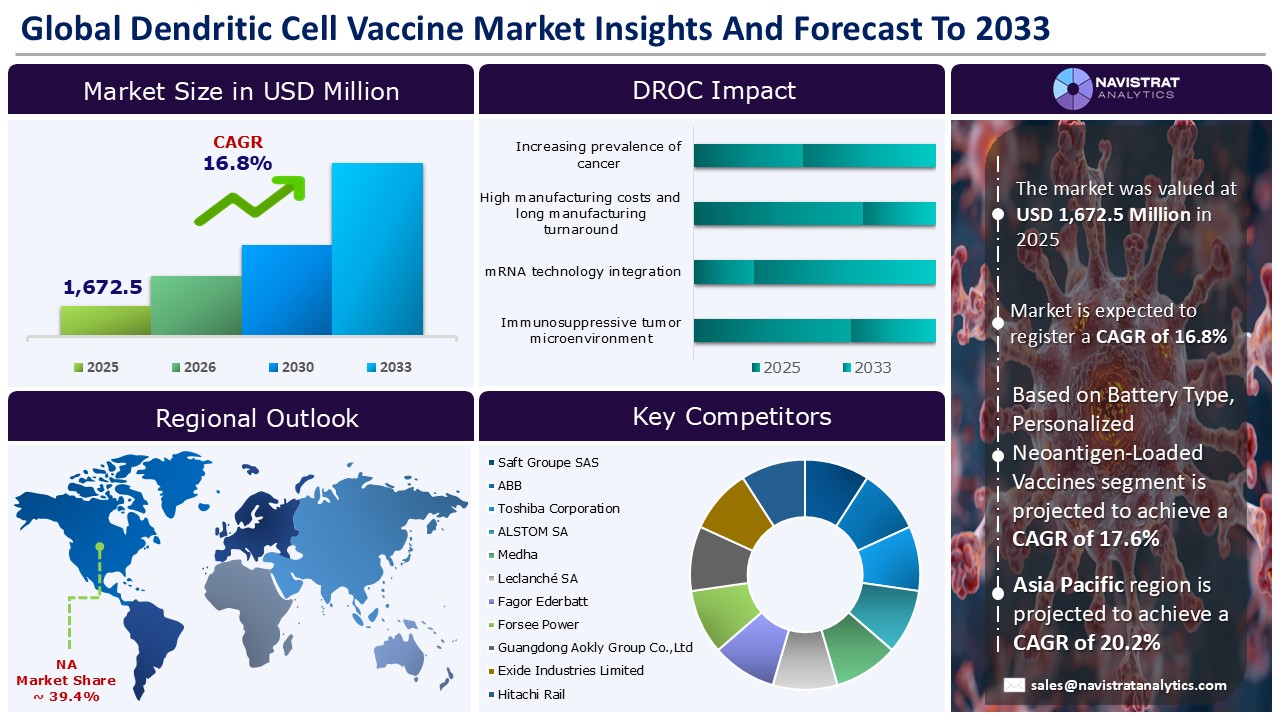
Market Drivers:
Increasing prevalence of cancer is a key driver driving the market revenue growth. According to the American Cancer Society, excluding non-melanoma skin cancer, at least 40% of newly diagnosed malignancies in US adults (about 850,000 cases in 2026) are potentially preventable, including 19% connected with cigarette smoking, 8% associated with excess body weight, and 5% associated with alcohol usage.
Everyone is at risk of acquiring cancer, but the frequency rises dramatically with age: 88% of cancer patients in the United States are 50 or older, and 59% are 65 or older. By 2050, the annual number of new cancer cases is predicted to reach 33 million, with 18.2 million cancer-related deaths. Routine screening can detect and eliminate precancerous tumors, preventing colorectal and cervical malignancies. Screening can minimize the chance of death from malignancies such as breast, lung, and prostate.
Technological advancements are quickly broadening the scope of this strategy. Early methods depended on simple antigen loading, while modern approaches use genetic modification, mRNA delivery systems, and cell fusion procedures to improve efficacy. Fusion-based vaccines, in example, combine dendritic cells and tumor cells, resulting in hybrid structures capable of presenting a wide range of cancer markers and stimulating a higher immune response.
On August 2026, Northwest Biotherapeutics, a biotechnology company developing DCVax personalized immune therapies for solid tumor cancers, announced that it has signed a non-binding Memorandum of Understanding (MOU) with the Saudi Pharmaceutical Industries and Medical Appliance Company (SPIMACO) to bring the Company’s DCVax-L products and technology into Saudi Arabia. The MOU sets a broad framework for negotiations for the prospective collaboration concerning the approval, commercialization, supply, and technology transfer of the Company’s DCVax-L product for glioblastoma brain cancer (Product) in Saudi Arabia.
Market Opportunity:
mRNA technology integration act as opportunity for dendritic cell vaccine market. DCs can be transfected with tumor-derived mRNA or DNA encoding antigens, resulting in endogenous antigen synthesis and presentation. This technique allows for sustained antigen expression and simultaneous presentation via both MHC class I and II pathways. Chemical changes and nanoparticle encapsulation have improved the efficiency of the mRNA vaccine design process.
One advantage of this strategy is that it lowers the likelihood of autoimmunity. The medication prevents the growth of patient-specific tumors, which include the patients’ normal self-antigens that the immune system recognizes. Dendritic cell vaccine development is quickly evolving, with breakthroughs in cell culture techniques, antigen load procedures, and clinical trial designs informing revisions aimed at overcoming earlier constraints. Clinical trials range from early phase safety studies to larger phase III trials, and the results have been variable yet positive enough to warrant further development.
Recent Trends:
Emerging trends include AI-based neoantigen prediction, mRNA-loaded dendritic cells, integration with precision oncology, combination with tumour-modifying therapies, and advanced antigen-loading technologies.
Incorporating artificial intelligence into the development and improvement of dendritic cell-based cancer vaccines has the potential to improve their efficacy and customization. AI-powered analyses can assist find ideal peptide sequences, vaccination parameters, and vaccine production procedures, resulting in more effective cancer immunotherapy. AI-guided codon optimization can ensure that mRNA vaccine constructions encoding patient-specific neoantigens produce high antigen levels in dendritic cells, resulting in enhanced immune activation.
This is especially important when constructing multivalent mRNA vaccines, as balanced expression of several antigens is required. AI models can optimize codon selection in a way that eliminates translation competition between distinct antigenic regions, ensuring that each neoantigen is sufficiently produced.
On September 2026, the OpenAI Foundation, OpenAI’s nonprofit parent organization, has donated USD 40 million to the UNC Lineberger Comprehensive Cancer Center in Chapel Hill, North Carolina, to produce data for the development of more specific, tailored cancer vaccinations. The researchers will collect data from 75 participants over the course of the next four years. The data is then entered into a computer to generate tailored vaccines. The foundation developed a USD 125 million funding program called Public Data for Health, which includes UNC Lineberger’s USD 40 million grant.
Restraints & Challenges:
Since their introduction, DC vaccines have become an important weapon in immunotherapy, with significant scientific progress and the development of a comprehensive theoretical framework and mature preparation techniques. While DC vaccines offer enormous potential and are seen as a future cornerstone of anti-tumor therapy, clinical trial results have been moderately positive. The primary problem is tumor-induced immunosuppression in the TME, which includes but is not limited to lowering DC numbers, depleting T-cells, and upregulating immunosuppressive cells.
The GMP-standard production of DC vaccines presents various difficulties related to scalability, cost-effectiveness, and compliance with regulations. Creating personalized DC vaccines under GMP conditions is inherently complex and expensive, particularly for autologous therapies like Sipuleucel-T, which encounter significant batch-to-batch variability, prolonged preparation times, and high treatment costs, greatly restricting their clinical effectiveness. Even though there is potential for scalable manufacturing of allogeneic DC vaccines, their use in clinical settings is obstructed by difficulties such as sustained efficacy over time, HLA limitations, safety concerns linked to allogeneic antigens, and disturbance caused by the patient’s immune microenvironment.
Vaccine Type Segment Insights and Analysis:
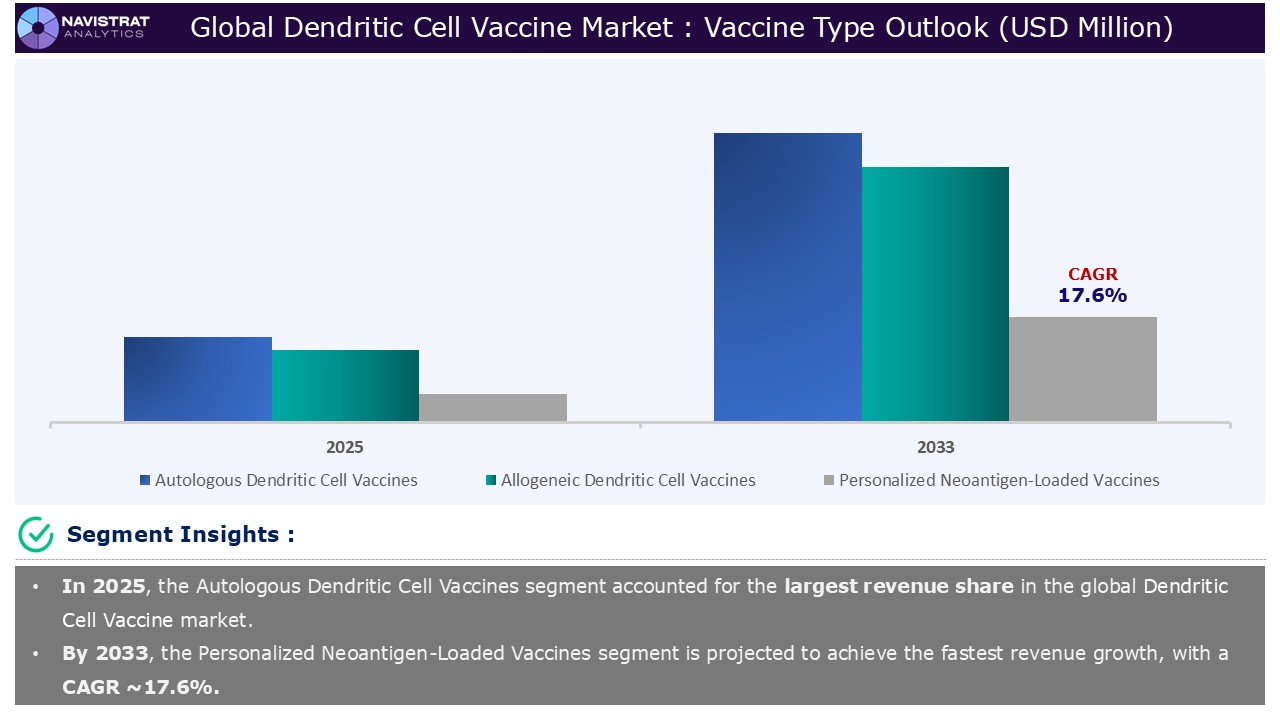
Based on the vaccine type, dendritic cell vaccine market is segmented into autologous dendritic cell vaccines, allogeneic dendritic cell vaccines, and personalized neoantigen-loaded vaccines.
Autologous dendritic cell vaccines segment contributed the largest market share in 2025. Autologous DC vaccines are developed using a patient’s own dendritic cells. The main advantages of autologous vaccines include lack of alloreactivity and personalized antigen presentation, which may be essential for targeting unique tumor neoantigens. This approach involves isolating monocytes or dendritic cells from a patient, loading them with specific tumor-associated antigens (TAAs), and re-administering them to the patient to stimulate a robust antigen-specific T cell response.
Although Sipuleucel-T remains the only FDA-approved treatment in this class for prostate cancer, many other formulations are in clinical trials for melanoma and glioblastoma. The effectiveness of these therapies often depends on the quality of dendritic cell maturation and the selection of highly immunogenic antigens. Despite their high specificity and favorable safety profile compared to traditional chemotherapy, therapeutic challenges include the labor-intensive manufacturing process and the immunosuppressive nature of the tumor microenvironment.
Technology Segment Insights and Analysis:
Based on the technology, dendritic cell vaccine market is segmented into antigen-pulsed dendritic cells, tumor-lysate-based vaccines, peptide/protein-loaded dendritic cells, mRNA-loaded dendritic cells, and viral-vector-based platforms.
Viral-vector-based platforms segment contributed the fastest growth rate during the forecasted period. DCs are also being generated by transduction with viral vectors carrying tumor antigens or immune-stimulatory molecules. This approach not only provides lasting antigen expression but can also deliver signals that promote DC maturation directly, opening avenues for combination therapies with immune checkpoint inhibitors.
These vaccine candidates target various cancer types, including melanoma, glioblastoma, renal cell carcinoma, colorectal cancer, and prostate cancer, demonstrating the versatility of the DC vaccine platform. Viral vectors represent an emerging antigen-delivery approach in dendritic cell vaccines, enabling the genetic introduction of tumor-specific or disease-associated antigens into dendritic cells and supporting subsequent antigen presentation and T-cell-mediated immune responses. Ongoing research into vector engineering, antigen expression, and delivery efficiency is contributing to the development of next-generation DC-based immunotherapies.
Cancer Type Segment Insights and Analysis:
Based on the technology, dendritic cell vaccine market is segmented into prostate, glioblastoma, melanoma, renal cell carcinoma, lung cancer, and others.
Glioblastoma segment contributed the largest market share in 2025. GBM accounts for 48% of all primary malignant brain tumours. It is estimated that more than 10,000 people die from glioblastoma each year in the United States. According to the Bryan National Tumour Society, glioblastoma is the most common primary malignant brain tumour, accounting for 13.7% of all tumours and 52.2% of all malignancies. According to the American Brain Tumour Society, the five-year survival rate for glioblastoma patients is only 6.8 percent. Gliomas account for approximately 42.9% of tumours in this age group. In children and adolescents, the incidence is higher in women than in men.
On October 2023, Diakonos Oncology Corporation, a clinical-stage immuno-oncology company, announced that the U.S. Food and Drug Administration (FDA) has granted Fast Track designation to its novel dendritic cell vaccine, DOC1021. The designation follows encouraging preliminary safety and efficacy findings from a Phase 1 clinical trial involving patients with glioblastoma multiforme (GBM). Developed at the Texas Medical Center in Houston, DOC1021 uses an innovative immunotherapeutic approach that activates the body’s natural antiviral immune mechanisms to target cancer. By mimicking characteristics of a viral infection using patient-specific cancer markers, the vaccine is designed to stimulate the immune system to recognize and eliminate cancer cells.
Geographical Outlook:
Dendritic cell vaccine market is strategically segmented by geography to provide a comprehensive understanding of regional market dynamic. Discover demand analysis, emerging trends, and growth opportunities shaping market performance across different region and countries.
North America Dendritic Cell Vaccine Market:
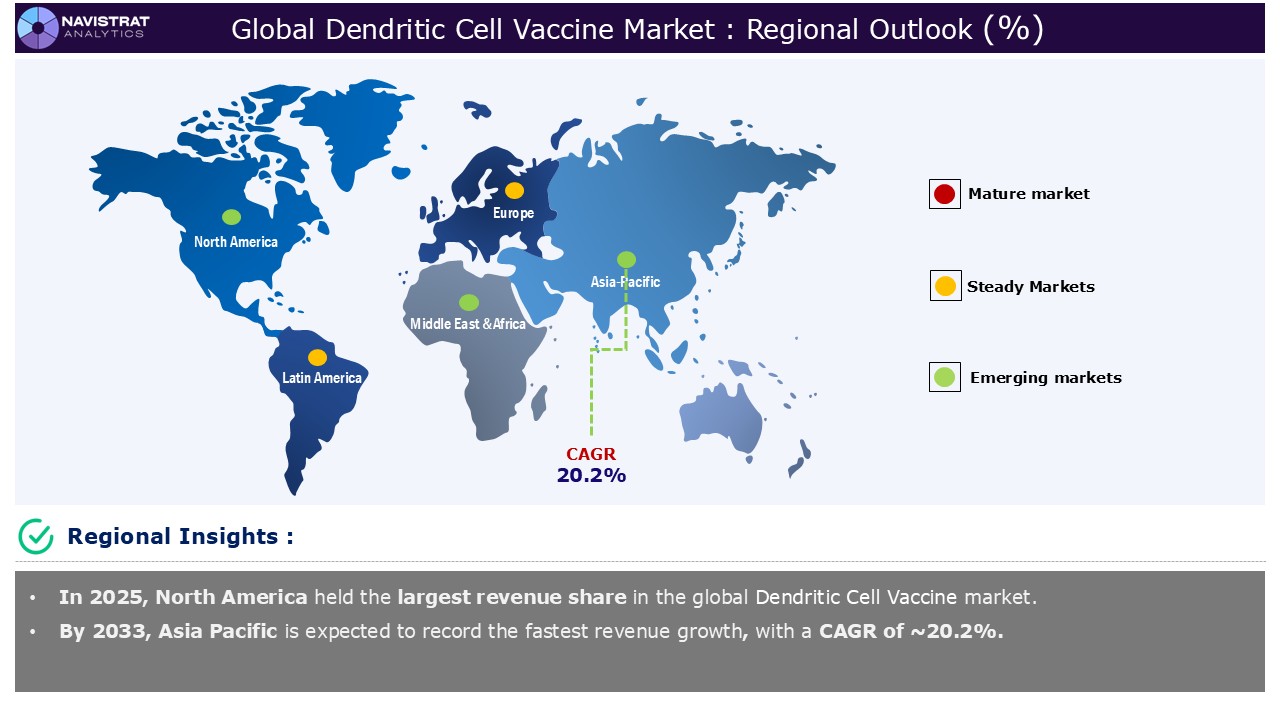
North America is registered to have highest market share in dendritic cell vaccine market in 2025, due to increasing prevalence of cancer and expansion of cancer immunotherapy. According to 2026 American Cancer Society estimates, prostate cancer in the United States is expected to account for approximately 333,830 new cases and 36,320 deaths. Approximately 1 in 8 men will develop prostate cancer during their lifetime. Doctors predominantly diagnose the disease in older men, with approximately 60% of cases occurring among men aged 65 years and older, while prostate cancer remains uncommon among men under 40. Among American men, prostate cancer ranks as the second-leading cause of cancer-related deaths after lung cancer, and approximately 1 in 44 men is expected to die from the disease.
Dendritic cell therapy has emerged as a promising treatment approach for men with early-stage prostate cancer, with the potential to lower the likelihood of disease progression. Molecular research examining interactions between dendritic cells and prostate cancer cells indicates that, following appropriate laboratory activation, the immune system can effectively recognize specific tumor-associated antigens. When administered during the early stages of treatment, dendritic cell-based vaccines may stimulate a robust and targeted immune response against cancer cells, potentially helping to limit disease progression and reduce the risk of subsequent spread.
On May 2026, BriaCell Therapeutics, a clinical-stage biotechnology company focused on developing innovative immunotherapies for cancer treatment, announced the completion of clinical supply manufacturing for Bria-PROS+, its next-generation, personalized, off-the-shelf, cell-based immunotherapy candidate for prostate cancer. In August 2025, the company received a USD 2 million non-dilutive grant from the U.S. National Cancer Institute (NCI) to support the manufacturing activities and planned clinical evaluation of Bria-PROS+.
Asia Pacific Dendritic Cell Vaccine Market:
Asia Pacific is expected to register the fastest growth rate during the forecasted period. The Asia Pacific dendritic cell vaccine market is being supported by increasing cancer incidence, growing investment in immuno-oncology research, and the expansion of clinical research involving personalized and antigen-specific cancer vaccines. Countries such as Japan, China, South Korea, and Singapore are contributing to the development of dendritic cell-based therapies through clinical studies and advanced cell-therapy research.
The region is also witnessing increasing research into personalized and neoantigen-based dendritic cell vaccines, which use patient-specific tumor characteristics to stimulate targeted immune responses. Recent Japanese research has reported preliminary safety and clinical activity for personalized neoantigen-pulsed dendritic cell vaccination in patients with solid tumors, further demonstrating the region’s growing focus on individualized immunotherapy approaches.
On August 2026, DiveRadGel Co., Ltd. has successfully closed a seed financing round backed by ANRI and TOHOKU University Venture Partners Co., Ltd. The funding will support the expansion of nonclinical proof-of-concept studies for its cancer vaccine programs, accelerate the development of vaccine candidates, and advance feasibility assessments. The company also plans to use the proceeds to strengthen collaborative development initiatives with academic institutions and pharmaceutical companies in Japan and international markets.
Competition Analysis:
Dendritic cell vaccine market is characterized by a consolidated structure, with few players competing across various segments and regions. List of major players included in dendritic cell vaccine market report are:
- Mill Creek Life Sciences, Inc.
- Creative Biolabs
- APAC Biotech
- Northwest Biotherapeutics, Inc.
- NexImmune, Inc.
- CellXLife
- MaxCyte
- Diakonos Oncology Corporation
- Corner Therapeutics
- PDC*line Pharma
- OmniCyte LLC
Strategic Developments in Dendritic Cell Vaccine Market:
- In June 2026, CellxLife has entered into a licensing agreement with Mayo Clinic for a cell-based vaccine designed to train the immune system to recognize ovarian cancer cells and potentially reduce the risk of disease recurrence. Early clinical studies have reported prolonged survival among some patients, supporting further development of the approach. The agreement builds on CellxLife’s proprietary technology platform, which uses patients’ own dendritic cells to develop personalized cell-based cancer vaccines.
- In December 2025, Diakonos Oncology Corp., a clinical-stage biotechnology company, announced that the Cancer Prevention and Research Institute of Texas (CPRIT) selected the company to receive a Product Development Research Grant worth more than USD 7 million. CPRIT selected Diakonos Oncology Corp. as one of nine recipients from 164 applicants for its proposal, titled “Advancing DOC1021: Phase 1/2 Refractory Melanoma Study.” The grant will support the company’s efforts to advance DOC1021 into early-stage clinical development for refractory melanoma, marking the therapy’s third target indication.
Key Advantages for Stakeholders:
Navistrat Analytics’ industry report provides an in-depth quantitative analysis of various market segments, historical and current trends, market forecasts, and dynamics within the global market. The historical years covered in this report are 2023 to 2024, with 2025 serving as the base year for market size calculations. The forecast period extends from 2026 to 2033.
The report includes an executive summary and a comprehensive overview of market drivers, restraints, opportunities, and challenges (DROC), along with insights into regulatory standards. It features detailed analyses such as PORTER’s Five Forces, SWOT, and PESTLE, as well as assessments of technological trends and the competitive landscape.
PORTER’s Five Forces analysis helps stakeholders evaluate the impact of new entrants, competitive rivalry, supplier power, buyer power, and substitution threats, enabling them to assess the level of competition and the attractiveness of the global market. The competitive landscape provides stakeholders with a clear understanding of the current market positions of key players, offering valuable insights into their competitive environment.
Scope And Key Highlights Of Dendritic Cell Vaccine Market Report:
| Report Features | Details |
| Market Size in 2025 | USD 1,672.5 Million |
| Market Growth Rate in CAGR (2026–2033) | 16.8% |
| Market Revenue forecast to 2033 | USD 5,819.4 Million |
| Base year | 2025 |
| Historical year | 2023-2024 |
| Forecast period | 2026-2033 |
| Report Pages | 450 |
| Segments covered |
|
| Regional scope |
|
| Country Scope |
|
| Key Market Players |
|
| Delivery Format | Reports are delivered in PDF format via email. |
| Customization scope | Request for Customization |
Dendritic Cell Vaccine market report offers a detailed analysis of market size, including historical revenue (in USD Million) data for 2023-2024 and revenue forecasts for 2026-2033 across the following segments:
- Vaccine Type Outlook (Revenue, USD Million; 2023-2033)
- Autologous Dendritic Cell Vaccines
- Allogeneic Dendritic Cell Vaccines
- Personalized Neoantigen-Loaded Vaccines
- Technology Outlook (Revenue, USD Million; 2023-2033)
- Antigen-Pulsed Dendritic Cells
- Tumor-Lysate-Based Vaccines
- Peptide/Protein-Loaded Dendritic Cells
- mRNA-Loaded Dendritic Cells
- Viral-Vector-Based Platforms
- Cancer Type Outlook (Revenue, USD Million; 2023-2033)
- Prostate
- Glioblastoma
- Melanoma
- Renal Cell Carcinoma
- Lung Cancer
- Others
- End-Use Outlook (Revenue, USD Million; 2023-2033)
- Hospitals
- Research Institutions
- Cancer Treatment Centers
- Biopharmaceutical Companies
- Regional Outlook (Revenue, USD Million; 2023-2033)
- North America
- U.S.
- Canada
- Mexico
- Europe
- Germany
- France
- U.K.
- Italy
- Spain
- Benelux
- Nordic Countries
- Rest of Europe
- Asia Pacific
- China
- India
- Japan
- South Korea
- Oceania
- ASEAN Countries
- Rest of APAC
- Latin America
- Brazil
- Rest of LATAM
- Middle East & Africa
- GCC Countries
- South Africa
- Israel
- Turkey
- Rest of MEA
- North America
Frequently Asked Questions (FAQ) about Dendritic Cell Vaccine Market report
The market size of dendritic cell vaccine market was 1,672.5 million in 2025.
The market size of dendritic cell vaccine market is expected to register compound annual growth rate (CAGR) of 16.8% over the forecast period.
Increasing prevalence of cancer, growing adoption of personalized medicine, and expansion of cancer immunotherapy are major key factors driving the market revenue growth of dendritic cell vaccine market.
High manufacturing costs and long manufacturing turnaround and complex logistics and limited reimbursements are key limiting factors driving the market.
Asia Pacific account for fastest revenue growth of 20.2%.
Autologous dendritic cell vaccines is the major leading segment of dendritic cell vaccine market in terms of vaccine type.
- Market Definition
- Research Objective
- Research Methodology
- Research Design
- Data Collection Methods
- Primary
- Secondary
- Market Size Estimation
- Top-down Model Method
- Bottom-up Model Method
- Forecasting Methodology
- Tools and Models Used
- Market Overview and Trends
- Market Size and Forecast
- Industry Analysis
- Market Driver, Restraints, Opportunity, and Challenges (DROC) Analysis
- Market Drivers
- Increasing prevalence of cancer
- Growing adoption of personalized medicine
- Expansion of cancer immunotherapy
- Market Restraints
- High manufacturing costs and long manufacturing turnaround
- Complex logistics and limited reimbursements
- Market Opportunities
- Neoantigen-based personalized vaccines
- mRNA technology integration
- Automation of cell manufacturing
- Market Challenges
- Immunosuppressive tumor microenvironment
- Regulatory complexity and scalability of personalized manufacturing
- Regulatory Landscape
- North America
- Europe
- Asia Pacific
- Latin America
- Middle East and Africa
- Strategic Insights
- Porter’s Five Forces Analysis
- PESTLE Analysis
- Price Trend Analysis
- Value Chain Analysis
- Technological Trends
- AI-Based Neoantigen Prediction
- mRNA-Loaded Dendritic Cells
- Integration with Precision Oncology
- Combination with Tumor-Modifying Therapies
- Advanced Antigen-Loading Technologies
- Recent Developments
- Funding
- Merger and Acquisition
- Expansion
- Partnership and Collaboration
- Product/ Service Launch
- Vaccine Type Market Revenue Estimates and Forecasts, 2023-2033
- Autologous Dendritic Cell Vaccines
- Allogeneic Dendritic Cell Vaccines
- Personalized Neoantigen-Loaded Vaccines
- Technology Market Revenue Estimates and Forecasts, 2023-2033
- Antigen-Pulsed Dendritic Cells
- Tumor-Lysate-Based Vaccines
- Peptide/Protein-Loaded Dendritic Cells
- mRNA-Loaded Dendritic Cells
- Viral-Vector-Based Platforms
- Cancer Type Market Revenue Estimates and Forecasts, 2023-2033
- Prostate
- Glioblastoma
- Melanoma
- Renal Cell Carcinoma
- Lung Cancer
- Others
- End-Use Market Revenue Estimates and Forecasts, 2023-2033
- Hospitals
- Research Institutions
- Cancer Treatment Centers
- Biopharmaceutical Companies
- Dendritic Cell Vaccine Market Revenue Estimates and Forecasts by Region, 2023-2033, USD Million
- North America
- North America Dendritic Cell Vaccine Market By Vaccine Type, Market Revenue Estimates and Forecasts, 2023-2033, USD Million
- Autologous Dendritic Cell Vaccines
- Allogeneic Dendritic Cell Vaccines
- Personalized Neoantigen-Loaded Vaccines
- North America Dendritic Cell Vaccine Market By Technology, Market Revenue Estimates and Forecasts, 2023-2033, USD Million
- Antigen-Pulsed Dendritic Cells
- Tumor-Lysate-Based Vaccines
- Peptide/Protein-Loaded Dendritic Cells
- mRNA-Loaded Dendritic Cells
- Viral-Vector-Based Platforms
- North America Dendritic Cell Vaccine Market By Cancer Type, Market Revenue Estimates and Forecasts, 2023-2033, USD Million
- Prostate
- Glioblastoma
- Melanoma
- Renal Cell Carcinoma
- Lung Cancer
- Others
- North America Dendritic Cell Vaccine Market By End-Use, Market Revenue Estimates and Forecasts, 2023-2033, USD Million
- Hospitals
- Research Institutions
- Cancer Treatment Centers
- Biopharmaceutical Companies
- North America Dendritic Cell Vaccine Market Revenue Estimates and Forecasts by Country, 2023-2033, USD Million
- United States
- Canada
- Mexico
- North America Dendritic Cell Vaccine Market By Vaccine Type, Market Revenue Estimates and Forecasts, 2023-2033, USD Million
- Europe
- Europe Dendritic Cell Vaccine Market By Vaccine Type, Market Revenue Estimates and Forecasts, 2023-2033, USD Million
- Autologous Dendritic Cell Vaccines
- Allogeneic Dendritic Cell Vaccines
- Personalized Neoantigen-Loaded Vaccines
- Europe Dendritic Cell Vaccine Market By Technology, Market Revenue Estimates and Forecasts, 2023-2033, USD Million
- Antigen-Pulsed Dendritic Cells
- Tumor-Lysate-Based Vaccines
- Peptide/Protein-Loaded Dendritic Cells
- mRNA-Loaded Dendritic Cells
- Viral-Vector-Based Platforms
- Europe Dendritic Cell Vaccine Market By Cancer Type, Market Revenue Estimates and Forecasts, 2023-2033, USD Million
- Prostate
- Glioblastoma
- Melanoma
- Renal Cell Carcinoma
- Lung Cancer
- Others
- Europe Dendritic Cell Vaccine Market By End-Use, Market Revenue Estimates and Forecasts, 2023-2033, USD Million
- Hospitals
- Research Institutions
- Cancer Treatment Centers
- Biopharmaceutical Companies
- Europe Dendritic Cell Vaccine Market Revenue Estimates and Forecasts by Country, 2023-2033, USD Million
- Germany
- United Kingdom
- France
- Italy
- Spain
- Benelux
- Nordic Countries
- Rest of Europe
- Europe Dendritic Cell Vaccine Market By Vaccine Type, Market Revenue Estimates and Forecasts, 2023-2033, USD Million
- Asia Pacific
- Asia Pacific Dendritic Cell Vaccine Market By Vaccine Type, Market Revenue Estimates and Forecasts, 2023-2033, USD Million
- Autologous Dendritic Cell Vaccines
- Allogeneic Dendritic Cell Vaccines
- Personalized Neoantigen-Loaded Vaccines
- Asia Pacific Dendritic Cell Vaccine Market By Technology, Market Revenue Estimates and Forecasts, 2023-2033, USD Million
- Antigen-Pulsed Dendritic Cells
- Tumor-Lysate-Based Vaccines
- Peptide/Protein-Loaded Dendritic Cells
- mRNA-Loaded Dendritic Cells
- Viral-Vector-Based Platforms
- Asia Pacific Dendritic Cell Vaccine Market By Cancer Type, Market Revenue Estimates and Forecasts, 2023-2033, USD Million
- Prostate
- Glioblastoma
- Melanoma
- Renal Cell Carcinoma
- Lung Cancer
- Others
- Asia Pacific Dendritic Cell Vaccine Market By End-Use, Market Revenue Estimates and Forecasts, 2023-2033, USD Million
- Hospitals
- Research Institutions
- Cancer Treatment Centers
- Biopharmaceutical Companies
- Asia Pacific Dendritic Cell Vaccine Market Revenue Estimates and Forecasts by Country, 2023-2033, USD Million
- China
- India
- Japan
- South Korea
- Oceania
- ASEAN Countries
- Rest of Asia-Pacific
- Asia Pacific Dendritic Cell Vaccine Market By Vaccine Type, Market Revenue Estimates and Forecasts, 2023-2033, USD Million
- Latin America
- Latin America Dendritic Cell Vaccine Market By Vaccine Type, Market Revenue Estimates and Forecasts, 2023-2033, USD Million
- Autologous Dendritic Cell Vaccines
- Allogeneic Dendritic Cell Vaccines
- Personalized Neoantigen-Loaded Vaccines
- Latin America Dendritic Cell Vaccine Market By Technology, Market Revenue Estimates and Forecasts, 2023-2033, USD Million
- Antigen-Pulsed Dendritic Cells
- Tumor-Lysate-Based Vaccines
- Peptide/Protein-Loaded Dendritic Cells
- mRNA-Loaded Dendritic Cells
- Viral-Vector-Based Platforms
- Latin America Dendritic Cell Vaccine Market By Cancer Type, Market Revenue Estimates and Forecasts, 2023-2033, USD Million
- Prostate
- Glioblastoma
- Melanoma
- Renal Cell Carcinoma
- Lung Cancer
- Others
- Latin America Dendritic Cell Vaccine Market By End-Use, Market Revenue Estimates and Forecasts, 2023-2033, USD Million
- Hospitals
- Research Institutions
- Cancer Treatment Centers
- Biopharmaceutical Companies
- Latin America Dendritic Cell Vaccine Market Revenue Estimates and Forecasts by Country, 2023-2033, USD Million
- Brazil
- Rest of Latin America
- Latin America Dendritic Cell Vaccine Market By Vaccine Type, Market Revenue Estimates and Forecasts, 2023-2033, USD Million
- Middle East and Africa
- Middle East and Africa Dendritic Cell Vaccine Market By Vaccine Type, Market Revenue Estimates and Forecasts, 2023-2033, USD Million
- Autologous Dendritic Cell Vaccines
- Allogeneic Dendritic Cell Vaccines
- Personalized Neoantigen-Loaded Vaccines
- Middle East and Africa Dendritic Cell Vaccine Market By Technology, Market Revenue Estimates and Forecasts, 2023-2033, USD Million
- Antigen-Pulsed Dendritic Cells
- Tumor-Lysate-Based Vaccines
- Peptide/Protein-Loaded Dendritic Cells
- mRNA-Loaded Dendritic Cells
- Viral-Vector-Based Platforms
- Middle East and Africa Dendritic Cell Vaccine Market By Cancer Type, Market Revenue Estimates and Forecasts, 2023-2033, USD Million
- Prostate
- Glioblastoma
- Melanoma
- Renal Cell Carcinoma
- Lung Cancer
- Others
- Middle East and Africa Dendritic Cell Vaccine Market By End-Use, Market Revenue Estimates and Forecasts, 2023-2033, USD Million
- Hospitals
- Research Institutions
- Cancer Treatment Centers
- Biopharmaceutical Companies
- Middle East and Africa Dendritic Cell Vaccine Market Revenue Estimates and Forecasts by Country, 2023-2033, USD Million
- GCC Countries
- South Africa
- Israel
- Turkey
- Rest of Middle East & Africa
- Middle East and Africa Dendritic Cell Vaccine Market By Vaccine Type, Market Revenue Estimates and Forecasts, 2023-2033, USD Million
- North America
- Market Share Analysis
- Revenue Market Share by Key Players (2024-2025)
- Analysis of Top Players by Market Presence
- Competitive Matrix
- Competitive Strategies
- Mergers and Acquisitions
- Partnerships and Collaboration
- Investment and Fundings
- Agreement
- Expansion
- New Product/ Services Launches
- Technological Innovations
- Mill Creek Life Sciences, Inc.
- Company Overview
- Financial Insights
- Product/ Services Offerings
- Strategic Developments
- SWOT Analysis
- Creative Biolabs
- Company Overview
- Financial Insights
- Product / Services Offerings
- Strategic Developments
- SWOT Analysis
- APAC Biotech
- Company Overview
- Financial Insights
- Product/ Services Offerings
- Strategic Developments
- SWOT Analysis
- Northwest Biotherapeutics, Inc.
- Company Overview
- Financial Insights
- Product / Services Offerings
- Strategic Developments
- SWOT Analysis
- NexImmune, Inc.
- Company Overview
- Financial Insights
- Product / Services Offerings
- Strategic Developments
- SWOT Analysis
- CellXLife
- Company Overview
- Financial Insights
- Product / Services Offerings
- Strategic Developments
- SWOT Analysis
- MaxCyte
- Company Overview
- Financial Insights
- Product / Services Offerings
- Strategic Developments
- SWOT Analysis
- Diakonos Oncology Corporation
- Company Overview
- Financial Insights
- Product / Services Offerings
- Strategic Developments
- SWOT Analysis
- Corner Therapeutics
- Company Overview
- Financial Insights
- Product / Services Offerings
- Strategic Developments
- SWOT Analysis
- PDC*line Pharma
- Company Overview
- Financial Insights
- Product / Services Offerings
- Strategic Developments
- SWOT Analysis
- OmniCyte LLC
- Company Overview
- Financial Insights
- Product / Services Offerings
- Strategic Developments
- SWOT Analysis