

Immunoassay for Neurological Biomarkers Market Overview and Key Insights:
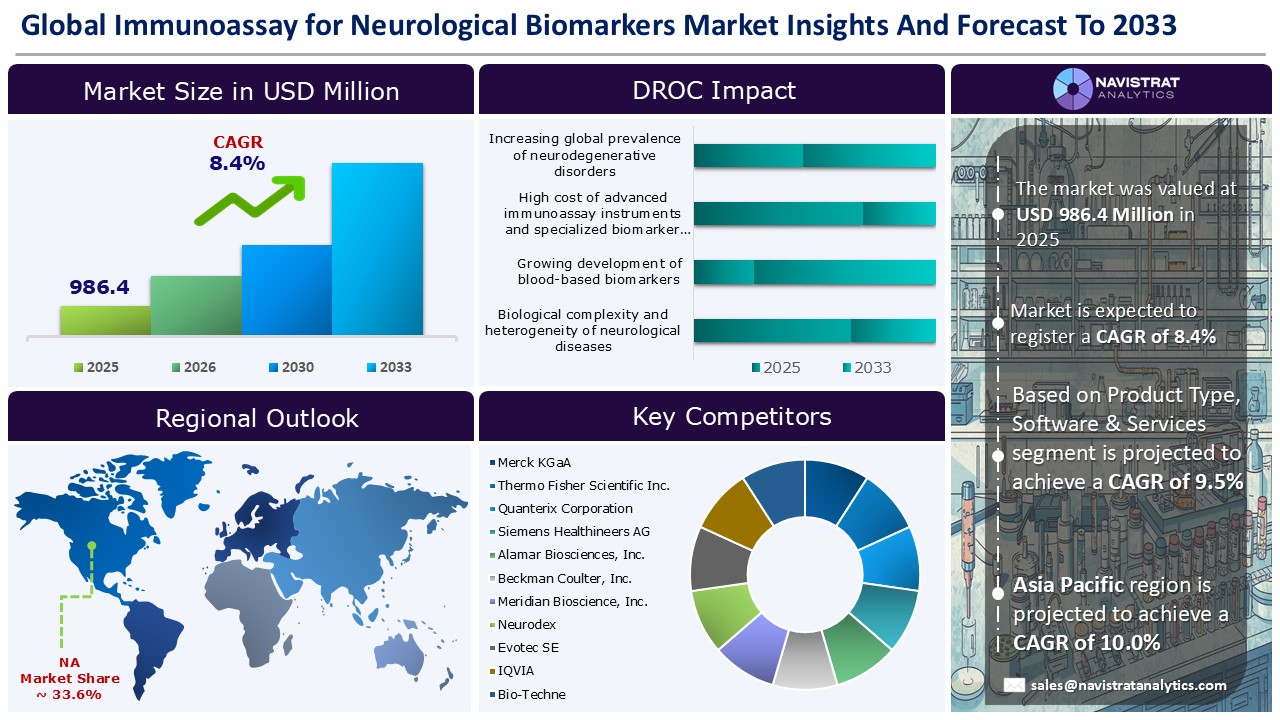
Immunoassay for neurological biomarkers market size reached USD 986.4 Million in 2025 and is expected to register a revenue CAGR of 8.6% during the forecast period. The development of biomarker detection methods, from immunoblotting to Simoa, has transformed the study and treatment of neurological diseases. These improvements have allowed for the detection and quantification of biomarkers in blood, offering a less invasive alternative to CSF sample. As these technologies advance, they hold the possibility of earlier diagnosis, improved disease progression tracking, and the development of more tailored treatment options for patients suffering from neurological illnesses.
Market Drivers:
Increasing global prevalence of neurodegenerative disorders is a key driver driving the market revenue growth. According to the Alzheimer’s Association, Alzheimer’s disease is the most common type of dementia, accounting for approximately 60% to 80% of cases. Most people show brain alterations consistent with one or more other types of dementia. Approximately 60% of patients with FTD are between the ages of 45 and 60. Only around 5% of older adults with dementia have DLB, but the majority of them also have Alzheimer’s disease-related brain abnormalities.
Biomarker assessment is crucial for identifying various disorders, tracking their course, and assessing treatment efficacy. Aβ peptides, total tau (t-tau), and phosphorylated tau (p-tau) are well-studied indicators of Alzheimer’s disease. These indicators were detected in CSF in clinical laboratories. On May 2026, Roche has acquired CE Mark approval for Elecsys pTau217, a blood test developed in conjunction with Eli Lilly and Company to evaluate the phosphorylated Tau (pTau) 217 protein, which is a biomarker of amyloid pathology and a hallmark of Alzheimer’s disease. The same blood test cutoffs (high and low) can be utilized in both primary and secondary care settings to rule in or rule out amyloid pathology in persons who present with symptoms or complaints of cognitive loss.
Moreover, on April 2025, Labcorp, a global leader in innovative and comprehensive laboratory services, has announced the statewide introduction of its pTau-217/Beta Amyloid 42 Ratio, a strong new blood-based biomarker test for Alzheimer’s disease. The new test adds to Labcorp’s leading blood-based biomarker array for Alzheimer’s disease and dementia.
Market Opportunity:
Growing development of blood-based biomarkers act as opportunity for immunoassay for neurological biomarkers market. Several blood-based biomarker technologies have recently demonstrated promise in detecting major specific and nonspecific pathophysiologic processes associated with neurodegenerative dementias. The field is quickly growing, with the number of studies testing blood biomarkers in neurodegenerative illnesses increasing by the day. Immunoassays with excellent accuracy have recently been developed and may provide a more accessible option due to their high throughput and ease of automation. Blood biomarkers can also be ranked based on their robustness, which is a measure of their ability to remain unaffected by minor changes in the parameters of their assessment methods and provides an indication of their reliability under normal conditions.
On July 2025, Spear Bio, a biotechnology company that pioneered homogenous ultrasensitive immunoassay technology, has announced the commercial availability of its SPEAR UltraDetect immunoassay solution. It provides unrivaled sensitivity, specificity, precision, and scalability for reliable biomarker measurement. The initial launch consists of four assays that target major neurology biomarkers: phosphorylated tau 231 (pTau231), phosphorylated tau 217 (pTau217), glial fibrillary acidic protein (GFAP), and neurofilament light. Spear Bio’s unique SPEAR technology is the first homogeneous immunoassay platform to reach ultra-sensitivity without requiring wash stages. It accurately measures protein biomarkers at attomolar concentrations with as low as 1 µl of diluted sample.
Recent Trends:
Emerging trends include ultra-high-sensitivity immunoassay platforms, microfluidic lab-on-a-chip immunoassays, Artificial intelligence-assisted biomarker interpretation, cloud-connected laboratory informatics and digital data management, and next-generation recombinant antibodies and engineered affinity reagents.
Lab-on-a-chip (LoC) technology has emerged as a game-changing platform for biomarker identification, combining various analytical processes into a single microfluidic device. Advances in microfabrication and fluid dynamics have enabled the development of tiny, automated assays with great sensitivity, rapid analysis, and portability. These advancements make several applications possible, including as nucleic acid and protein analysis, as well as multiplexed biomolecular detection.
The incorporation of AI has improved microfluidic platforms by improving fluidic designs, ensuring dependable operation, and allowing precise data interpretation. AI-driven analysis, combined with the speed and precision of microfluidics, is paving the way for automated diagnostic tools that aid in real-time healthcare choices. Microfluidics is finding new applications in fields such as early detection of neurological illnesses, microbiome analysis, and environmental monitoring. These applications go beyond the clinical laboratory, demonstrating the widespread effect of microfluidics in domains like as neuroscience and public health.
Restraints & Challenges:
Several challenges are expected to arise in the future for CNS biomarker researchers. A major impediment is the creation of biomarkers with increased sensitivity and specificity. Many existing biomarkers have limitations in these areas, making it challenging to effectively diagnose and monitor specific CNS illnesses. The intricate and multifaceted character of CNS illnesses adds to their complexity, making it difficult to identify and confirm biomarkers that accurately reflect the underlying pathophysiology. Furthermore, addressing the variability of CNS illnesses presents a complex issue, as it is difficult to discover biomarkers that can be reliably used across different subtypes of the disorder.
Product Type Segment Insights and Analysis:
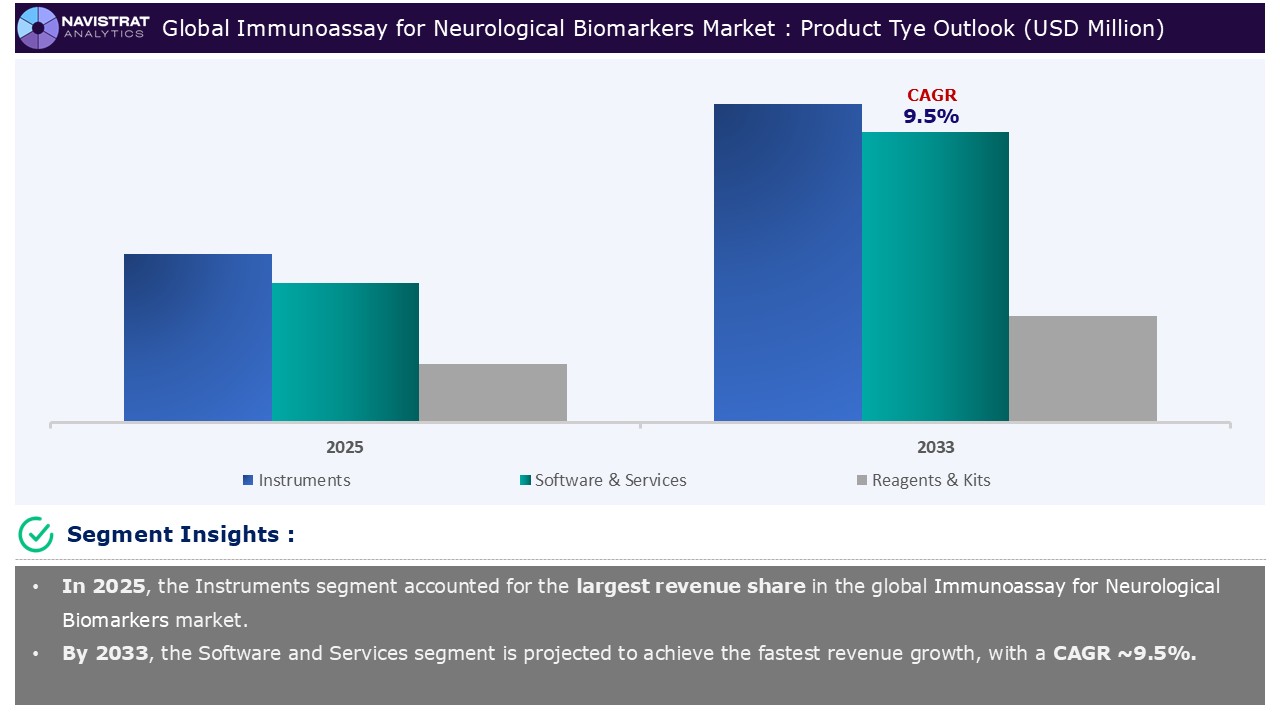
Based on the product type, immunoassay for neurological biomarkers market is segmented into instruments, reagents & kits, and software & services.
Instruments segment contributed the largest market share in 2025. They provide the analytical platforms required for the accurate detection and quantification of neurological biomarkers in clinical and research settings. Demand is increasing as healthcare providers seek highly sensitive, automated, and standardized diagnostic solutions for the early detection and monitoring of neurological disorders.
The increasing clinical adoption of blood-based biomarkers for neurodegenerative diseases has accelerated investments in high-sensitivity analyzers capable of detecting biomarkers such as amyloid-beta (Aβ40/Aβ42), phosphorylated tau (p-tau), total tau, neurofilament light chain (NfL), glial fibrillary acidic protein (GFAP), and ubiquitin carboxyl-terminal hydrolase L1 (UCH-L1) at very low concentrations. Modern platforms integrate advanced signal amplification technologies to improve analytical sensitivity and support earlier disease detection.
On June 2025, H.U. Group Holdings Inc. and its wholly-owned subsidiary Fujirebio have released the Lumipulse G sTREM2 assay for the fully automated LUMIPULSE G immunoassay analyzers. This CLEIA (chemiluminescent enzyme immunoassay) test is intended for Research Use Only (RUO) and can quantitatively assess soluble Triggering Receptor Expressed on Myeloid Cells 2 (sTREM2) in human cerebrospinal fluid (CSF) and blood in 35 minutes. sTREM2 is a promising biomarker of microglial activation that can help researchers understand neuroinflammation associated with Alzheimer’s and other neurodegenerative illnesses.
Technique Segment Insights and Analysis:
Based on the technique, immunoassay for neurological biomarkers market is segmented into Enzyme-Linked Immunosorbent Assay (ELISA), Chemiluminescent Immunoassay (CLIA), Fluorescence Immunoassay (FIA), Electrochemiluminescence Immunoassay (ECLIA), Lateral Flow Immunoassay (LFIA), and multiplex immunoassay.
Enzyme-Linked Immunosorbent Assay (ELISA) segment contributed the largest market share in 2025. ELISA testing is vital in medical treatment and scientific research. This approach is now being used in point-of-care settings, global health monitoring networks, and advanced discovery research, cementing its position as a vital analytical platform. Recent developments have generally focused on augmentation rather than replacement, giving classic ELISA new capabilities. The merging of ultrasensitive digital and single-molecule ELISA, such as Simoa and dELISA, allows for the identification of neurological biomarkers like tau and alpha-synuclein at femtomolar levels, transforming early neurodegenerative disease research. Furthermore, the increasing use of multiplexed bead-based and on-chip array platforms enables the simultaneous quantification of dozens of cytokines, chemokines, and autoantibodies from a single microsample, driving progress in systems immunology and customized therapy.
On May 2025, Aptamer Group plc, announced the successful adaptation of the Optimer-based test for Alzheimer’s disease into an Enzyme-Linked Immunosorbent Assay (ELISA), a widely accepted format in hospital laboratories. This advancement in test development comes after the recent demonstration of an Optimer-based biosensor test, which revealed a statistically significant difference in levels of a novel Alzheimer’s disease biomarker between saliva samples from Alzheimer’s patients and healthy patient controls. In parallel, Neuro-Bio is developing a medication that targets the unique biomarker and may be able to prevent Alzheimer’s disease symptoms from appearing.
Application Segment Insights and Analysis:
Based on the application, immunoassay for neurological biomarkers market is segmented into clinical diagnostics, drug discovery & development, academic & research, and disease monitoring.
Clinical diagnostics segment contributed the fastest growth rate in 2025. As the global burden of neurodegenerative and neurological diseases continues to rise, healthcare providers are increasingly incorporating immunoassay-based biomarker testing into routine clinical practice to support faster and more objective diagnostic decisions. The increasing availability of blood-based immunoassays is significantly expanding the clinical diagnostics segment by offering a less invasive alternative to cerebrospinal fluid (CSF) testing. High-sensitivity immunoassay technologies now enable the detection of low-abundance neurological biomarkers in serum and plasma, improving patient acceptance, facilitating routine screening, and supporting longitudinal disease monitoring.
On January 2026, Bio-Techne Corporation, a global leader of life science instruments, reagents, and diagnostics, announced the availability of Simple Plex Ultra-Sensitive Assays for the Ella automated benchtop platform. The new ultrasensitive assays improve the Ella platform’s analytical sensitivity and reliable measurement of important biomarkers such as NFL, GFAP, pTau 217, and Amyloid β (aa1-42). Ella’s automated approach lowers manual procedures and variability while providing ultrasensitive assay findings in under three hours. These tests are only designed for research purposes.
Geographical Outlook:
Immunoassay for neurological biomarkers market is strategically segmented by geography to provide a comprehensive understanding of regional market dynamic. Discover demand analysis, emerging trends, and growth opportunities shaping market performance across different region and countries.
North America Immunoassay for Neurological Biomarkers Market:
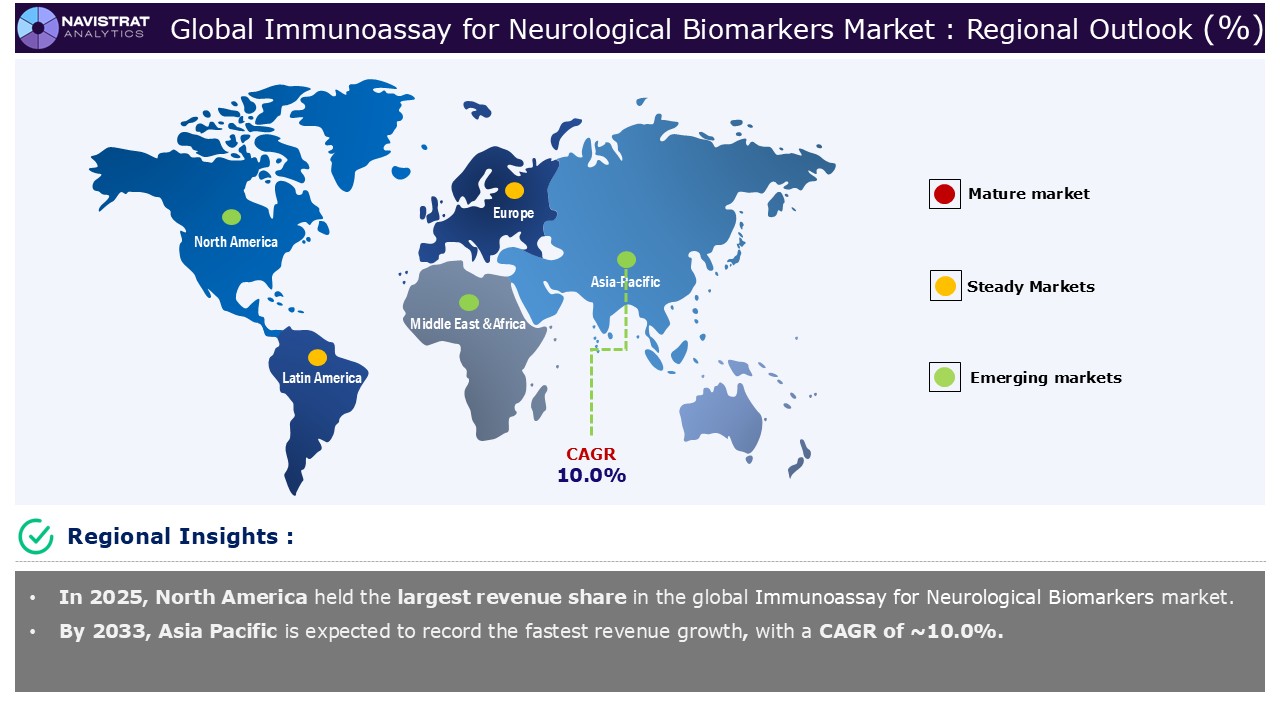
North America is registered to have highest market share in immunoassay for neurological biomarkers market in 2025, due to increasing global prevalence of neurodegenerative disorders and continuous advancements in high-sensitivity immunoassay technologies. According to Parkinson.org, in the United States, an estimated 1.1 million people live with Parkinson’s disease (PD). Parkinson’s disease is the second most common neurological disorder after Alzheimer’s disease. Healthcare experts predict that the number of people living with Parkinson’s disease will reach 1.2 million by 2030. In the United States, healthcare providers diagnose approximately 90,000 new cases of Parkinson’s disease each year. Globally, Parkinson’s disease affects an estimated 10 million people. Although the risk of developing Parkinson’s disease increases with age, physicians diagnose only about 4% of cases before the age of 50. Men are 1.5 times more likely than women to develop Parkinson’s disease.
On September 2025, Beckman Coulter Diagnostics, a Danaher firm that leads global clinical diagnostics innovation, has introduced the industry’s first fully automated Brain-derived Tau (BD-Tau) research use only (RUO) immunoassay test. Access BD-Tau, along with Beckman Coulter Diagnostics’ growing array of neurodegenerative disease RUO tests, is now available for use on the innovative DxI 9000 Immunoassay Analyzer and Access 2 Analyzer. This suite of assays offers precision medicine research on clinical-grade platforms for a number of neurodegenerative illnesses, including p‑Tau217, NfL, GFAP, and APOEε4.
Asia Pacific Immunoassay for Neurological Biomarkers Market:
Asia Pacific is expected to register the fastest growth rate during the forecasted period. Neuroscience in the Asia-Pacific region has grown dramatically over the last few decades, becoming an important contributor to worldwide scientific progress. The region’s tremendous diversity—which includes populations with various genetic profiles, varying environmental exposures, and distinct cultural contexts—makes it an ideal location for studying the complexity of brain function and neurological illnesses. Asia-Pacific research institutions and universities are rapidly being acknowledged for their excellence, providing meaningful studies that address both regional and global neurological concerns. Collaborative efforts within and beyond national lines have increased the region’s significance by allowing for the integration of cutting-edge techniques, new neurotechnology’s, and translational approaches that bring laboratory findings closer to clinical use.
On January 2024, Fujirebio Holdings, Inc. and Agappe Diagnostics Ltd announced that they have formed a Contract Development and Manufacturing Organization (CDMO) cooperation to manufacture cartridge-based CLIA system reagents for the immunology equipment Mispa i60 and Mispa i121. This project is expected to have a significant impact, with the progressive deployment of over 30 parameters across several areas such as oncology, thyroid, cardiac, fertility, and infectious diseases. The scope also includes Fujirebio’s unique biomarkers for Alzheimer’s disease and other neurodegenerative diseases.
Competition Analysis:
Immunoassay for neurological biomarkers market is characterized by a fragmented structure, with several players competing across various segments and regions. List of major players included in immunoassay for neurological biomarkers market report are:
- Merck KGaA
- Thermo Fisher Scientific Inc.
- Quanterix Corporation
- Siemens Healthineers AG
- Alamar Biosciences, Inc.
- Beckman Coulter, Inc.
- Meridian Bioscience, Inc.
- Neurodex
- Evotec SE
- IQVIA
- Bio-Techne
- Hoffmann-La Roche Ltd
Strategic Developments in Immunoassay for Neurological Biomarkers Market:
- In July 2026, Alamar Biosciences, Inc. has launched the first commercial eMTBR-Tau immunoassay, which is now available in the NULISAseq Neuro 220 multiplexed panel kits. It is immediately deployable on the entire installed base of ARGO HT instruments and as a single-plex assay through the company’s Technology Access Program (TAP). The assay detects eMTBR-Tau, a plasma biomarker that indicates tau tangle pathology and has been linked to cognitive decline, clinical disease staging, and therapy response monitoring in Alzheimer’s disease (AD).
- In July 2025, Bio-Techne Corporation has announced a collaborative relationship to commercialize Spear Bio’s next-generation ultrasensitive immunoassays, which enable the detection of low-abundance biomarkers in neurology. Bio-Techne will distribute Spear Bio’s ultrasensitive immunoassays for problematic low-abundance biomarkers, including critical Alzheimer’s disease biomarkers such as phosphorylated tau 217 (pTau 217), GFAP, neurofilament light (Nf-L), and phosphorylated tau 231. Spear Bio’s Successive Proximity Extension Amplification Reaction (SPEAR) platform, which is based on breakthrough technology obtained from Harvard University and amplified using conventional qPCR instrumentation, provides sensitivity two to three orders of magnitude higher than current immunoassay systems.
Key Advantages for Stakeholders:
Navistrat Analytics’ industry report provides an in-depth quantitative analysis of various market segments, historical and current trends, market forecasts, and dynamics within the global market. The historical years covered in this report are 2023 to 2024, with 2025 serving as the base year for market size calculations. The forecast period extends from 2026 to 2033.
The report includes an executive summary and a comprehensive overview of market drivers, restraints, opportunities, and challenges (DROC), along with insights into regulatory standards. It features detailed analyses such as PORTER’s Five Forces, SWOT, and PESTLE, as well as assessments of technological trends and the competitive landscape.
PORTER’s Five Forces analysis helps stakeholders evaluate the impact of new entrants, competitive rivalry, supplier power, buyer power, and substitution threats, enabling them to assess the level of competition and the attractiveness of the global market. The competitive landscape provides stakeholders with a clear understanding of the current market positions of key players, offering valuable insights into their competitive environment.
Scope And Key Highlights Of Immunoassay for Neurological Biomarkers Market Report:
| Report Features | Details |
| Market Size in 2025 | USD 986.4 Million |
| Market Growth Rate in CAGR (2026–2033) | 8.6% |
| Market Revenue forecast to 2033 | USD 1,917.8 Million |
| Base year | 2025 |
| Historical year | 2023-2024 |
| Forecast period | 2026-2033 |
| Report Pages | 450 |
| Segments covered |
|
| Regional scope |
|
| Country Scope |
|
| Key Market Players |
|
| Delivery Format | Reports are delivered in PDF format via email. |
| Customization scope | Request for Customization |
Immunoassay for Neurological Biomarkers market report offers a detailed analysis of market size, including historical revenue (in USD Million) data for 2023-2024 and revenue forecasts for 2026-2033 across the following segments:
- Product Type Outlook (Revenue, USD Million; 2023-2033)
- Instruments
- Reagents & Kits
- Software & Services
- Technique Outlook (Revenue, USD Million; 2023-2033)
- Enzyme-Linked Immunosorbent Assay (ELISA)
- Chemiluminescent Immunoassay (CLIA)
- Fluorescence Immunoassay (FIA)
- Electrochemiluminescence Immunoassay (ECLIA)
- Lateral Flow Immunoassay (LFIA)
- Multiplex Immunoassay
- Sample Type Outlook (Revenue, USD Million; 2023-2033)
- Blood
- Cerebrospinal Fluid (CSF)
- Urine
- Saliva
- Others
- Application Outlook (Revenue, USD Million; 2023-2033)
- Clinical Diagnostics
- Drug Discovery & Development
- Academic & Research
- Disease Monitoring
- End-Use Outlook (Revenue, USD Million; 2023-2033)
- Hospitals
- Diagnostic Laboratories
- Academic & Research Institutes
- Pharmaceutical & Biotechnology Companies
- Contract Research Organizations (CROs)
- Regional Outlook (Revenue, USD Million; 2023-2033)
- North America
- U.S.
- Canada
- Mexico
- Europe
- Germany
- France
- U.K.
- Italy
- Spain
- Benelux
- Nordic Countries
- Rest of Europe
- Asia Pacific
- China
- India
- Japan
- South Korea
- Oceania
- ASEAN Countries
- Rest of APAC
- Latin America
- Brazil
- Rest of LATAM
- Middle East & Africa
- GCC Countries
- South Africa
- Israel
- Turkey
- Rest of MEA
- North America
Frequently Asked Questions (FAQ) about Immunoassay for Neurological Biomarkers Market report
The market size of immunoassay for neurological biomarkers market was 986.4 million in 2025.
The market size of immunoassay for neurological biomarkers market is expected to register compound annual growth rate (CAGR) of 8.6% over the forecast period.
Increasing global prevalence of neurodegenerative disorders, growing emphasis on early disease diagnosis and intervention, and continuous advancements in high-sensitivity immunoassay technologies are major key factors driving the market revenue growth of immunoassay for neurological biomarkers market.
High cost of advanced immunoassay instruments and specialized biomarker assays and limited clinical standardization and variability in biomarker cutoff are key limiting factors driving the market.
Asia Pacific account for fastest revenue growth of 10.0%.
Instruments is the major leading segment of immunoassay for neurological biomarkers market in terms of product type.
- Market Definition
- Research Objective
- Research Methodology
- Research Design
- Data Collection Methods
- Primary
- Secondary
- Market Size Estimation
- Top-down Model Method
- Bottom-up Model Method
- Forecasting Methodology
- Tools and Models Used
- Market Overview and Trends
- Market Size and Forecast
- Industry Analysis
- Market Driver, Restraints, Opportunity, and Challenges (DROC) Analysis
- Market Drivers
- Increasing global prevalence of neurodegenerative disorders
- Growing emphasis on early disease diagnosis and intervention
- Continuous advancements in high-sensitivity immunoassay technologies
- Market Restraints
- High cost of advanced immunoassay instruments and specialized biomarker assays
- Limited clinical standardization and variability in biomarker cutoff
- Market Opportunities
- Growing development of blood-based biomarkers
- Increasing adoption of precision medicine
- Expansion of companion diagnostics for disease-modifying neurological therapies
- Market Challenges
- Biological complexity and heterogeneity of neurological diseases
- Shortages of standardized clinical reference materials
- Regulatory Landscape
- North America
- Europe
- Asia Pacific
- Latin America
- Middle East and Africa
- Strategic Insights
- Porter’s Five Forces Analysis
- PESTLE Analysis
- Price Trend Analysis
- Value Chain Analysis
- Technological Trends
- Ultra-high-sensitivity immunoassay platforms
- Microfluidic lab-on-a-chip immunoassays
- Artificial intelligence-assisted biomarker interpretation
- Cloud-connected laboratory informatics and digital data management
- Next-generation recombinant antibodies and engineered affinity reagents
- Recent Developments
- Funding
- Merger and Acquisition
- Expansion
- Partnership and Collaboration
- Product/ Service Launch
- Product Type Market Revenue Estimates and Forecasts, 2023-2033
- Instruments
- Reagents & Kits
- Software & Services
- Technique Market Revenue Estimates and Forecasts, 2023-2033
- Enzyme-Linked Immunosorbent Assay (ELISA)
- Chemiluminescent Immunoassay (CLIA)
- Fluorescence Immunoassay (FIA)
- Electrochemiluminescence Immunoassay (ECLIA)
- Lateral Flow Immunoassay (LFIA)
- Multiplex Immunoassay
- Sample Type Market Revenue Estimates and Forecasts, 2023-2033
- Blood
- Cerebrospinal Fluid (CSF)
- Urine
- Saliva
- Others
- Application Market Revenue Estimates and Forecasts, 2023-2033
- Clinical Diagnostics
- Drug Discovery & Development
- Academic & Research
- Disease Monitoring
- End-Use Market Revenue Estimates and Forecasts, 2023-2033
- Hospitals
- Diagnostic Laboratories
- Academic & Research Institutes
- Pharmaceutical & Biotechnology Companies
- Contract Research Organizations (CROs)
- Immunoassay for Neurological Biomarkers Market Revenue Estimates and Forecasts by Region, 2023-2033, USD Million
- North America
- North America Immunoassay for Neurological Biomarkers Market By Product Type, Market Revenue Estimates and Forecasts, 2023-2033, USD Million
- Instruments
- Reagents & Kits
- Software & Services
- North America Immunoassay for Neurological Biomarkers Market By Technique, Market Revenue Estimates and Forecasts, 2023-2033, USD Million
- Enzyme-Linked Immunosorbent Assay (ELISA)
- Chemiluminescent Immunoassay (CLIA)
- Fluorescence Immunoassay (FIA)
- Electrochemiluminescence Immunoassay (ECLIA)
- Lateral Flow Immunoassay (LFIA)
- Multiplex Immunoassay
- North America Immunoassay for Neurological Biomarkers Market By Sample Type, Market Revenue Estimates and Forecasts, 2023-2033, USD Million
- Blood
- Cerebrospinal Fluid (CSF)
- Urine
- Saliva
- Others
- North America Immunoassay for Neurological Biomarkers Market By Application, Market Revenue Estimates and Forecasts, 2023-2033, USD Million
- Clinical Diagnostics
- Drug Discovery & Development
- Academic & Research
- Disease Monitoring
- North America Immunoassay for Neurological Biomarkers Market By End-Use, Market Revenue Estimates and Forecasts, 2023-2033, USD Million
- Hospitals
- Diagnostic Laboratories
- Academic & Research Institutes
- Pharmaceutical & Biotechnology Companies
- Contract Research Organizations (CROs)
- North America Immunoassay for Neurological Biomarkers Market Revenue Estimates and Forecasts by Country, 2023-2033, USD Million
- United States
- Canada
- Mexico
- North America Immunoassay for Neurological Biomarkers Market By Product Type, Market Revenue Estimates and Forecasts, 2023-2033, USD Million
- Europe
- Europe Immunoassay for Neurological Biomarkers Market By Product Type, Market Revenue Estimates and Forecasts, 2023-2033, USD Million
- Instruments
- Reagents & Kits
- Software & Services
- Europe Immunoassay for Neurological Biomarkers Market By Technique, Market Revenue Estimates and Forecasts, 2023-2033, USD Million
- Enzyme-Linked Immunosorbent Assay (ELISA)
- Chemiluminescent Immunoassay (CLIA)
- Fluorescence Immunoassay (FIA)
- Electrochemiluminescence Immunoassay (ECLIA)
- Lateral Flow Immunoassay (LFIA)
- Multiplex Immunoassay
- Europe Immunoassay for Neurological Biomarkers Market By Sample Type, Market Revenue Estimates and Forecasts, 2023-2033, USD Million
- Blood
- Cerebrospinal Fluid (CSF)
- Urine
- Saliva
- Others
- Europe Immunoassay for Neurological Biomarkers Market By Application, Market Revenue Estimates and Forecasts, 2023-2033, USD Million
- Clinical Diagnostics
- Drug Discovery & Development
- Academic & Research
- Disease Monitoring
- Europe Immunoassay for Neurological Biomarkers Market By End-Use, Market Revenue Estimates and Forecasts, 2023-2033, USD Million
- Hospitals
- Diagnostic Laboratories
- Academic & Research Institutes
- Pharmaceutical & Biotechnology Companies
- Contract Research Organizations (CROs)
- Europe Immunoassay for Neurological Biomarkers Market Revenue Estimates and Forecasts by Country, 2023-2033, USD Million
- Germany
- United Kingdom
- France
- Italy
- Spain
- Benelux
- Nordic Countries
- Rest of Europe
- Europe Immunoassay for Neurological Biomarkers Market By Product Type, Market Revenue Estimates and Forecasts, 2023-2033, USD Million
- Asia Pacific
- Asia Pacific Immunoassay for Neurological Biomarkers Market By Product Type, Market Revenue Estimates and Forecasts, 2023-2033, USD Million
- Instruments
- Reagents & Kits
- Software & Services
- Asia Pacific Immunoassay for Neurological Biomarkers Market By Technique, Market Revenue Estimates and Forecasts, 2023-2033, USD Million
- Enzyme-Linked Immunosorbent Assay (ELISA)
- Chemiluminescent Immunoassay (CLIA)
- Fluorescence Immunoassay (FIA)
- Electrochemiluminescence Immunoassay (ECLIA)
- Lateral Flow Immunoassay (LFIA)
- Multiplex Immunoassay
- Asia Pacific Immunoassay for Neurological Biomarkers Market By Sample Type, Market Revenue Estimates and Forecasts, 2023-2033, USD Million
- Blood
- Cerebrospinal Fluid (CSF)
- Urine
- Saliva
- Others
- Asia Pacific Immunoassay for Neurological Biomarkers Market By Application, Market Revenue Estimates and Forecasts, 2023-2033, USD Million
- Clinical Diagnostics
- Drug Discovery & Development
- Academic & Research
- Disease Monitoring
- Asia Pacific Immunoassay for Neurological Biomarkers Market By End-Use, Market Revenue Estimates and Forecasts, 2023-2033, USD Million
- Hospitals
- Diagnostic Laboratories
- Academic & Research Institutes
- Pharmaceutical & Biotechnology Companies
- Contract Research Organizations (CROs)
- Asia Pacific Immunoassay for Neurological Biomarkers Market Revenue Estimates and Forecasts by Country, 2023-2033, USD Million
- China
- India
- Japan
- South Korea
- Oceania
- ASEAN Countries
- Rest of Asia-Pacific
- Asia Pacific Immunoassay for Neurological Biomarkers Market By Product Type, Market Revenue Estimates and Forecasts, 2023-2033, USD Million
- Latin America
- Latin America Immunoassay for Neurological Biomarkers Market By Product Type, Market Revenue Estimates and Forecasts, 2023-2033, USD Million
- Instruments
- Reagents & Kits
- Software & Services
- Latin America Immunoassay for Neurological Biomarkers Market By Technique, Market Revenue Estimates and Forecasts, 2023-2033, USD Million
- Enzyme-Linked Immunosorbent Assay (ELISA)
- Chemiluminescent Immunoassay (CLIA)
- Fluorescence Immunoassay (FIA)
- Electrochemiluminescence Immunoassay (ECLIA)
- Lateral Flow Immunoassay (LFIA)
- Multiplex Immunoassay
- Latin America Immunoassay for Neurological Biomarkers Market By Sample Type, Market Revenue Estimates and Forecasts, 2023-2033, USD Million
- Blood
- Cerebrospinal Fluid (CSF)
- Urine
- Saliva
- Others
- Latin America Immunoassay for Neurological Biomarkers Market By Application, Market Revenue Estimates and Forecasts, 2023-2033, USD Million
- Clinical Diagnostics
- Drug Discovery & Development
- Academic & Research
- Disease Monitoring
- Latin America Immunoassay for Neurological Biomarkers Market By End-Use, Market Revenue Estimates and Forecasts, 2023-2033, USD Million
- Hospitals
- Diagnostic Laboratories
- Academic & Research Institutes
- Pharmaceutical & Biotechnology Companies
- Contract Research Organizations (CROs)
- Latin America Immunoassay for Neurological Biomarkers Market Revenue Estimates and Forecasts by Country, 2023-2033, USD Million
- Brazil
- Rest of Latin America
- Latin America Immunoassay for Neurological Biomarkers Market By Product Type, Market Revenue Estimates and Forecasts, 2023-2033, USD Million
- Middle East and Africa
- Middle East and Africa Immunoassay for Neurological Biomarkers Market By Product Type, Market Revenue Estimates and Forecasts, 2023-2033, USD Million
- Instruments
- Reagents & Kits
- Software & Services
- Middle East and Africa Immunoassay for Neurological Biomarkers Market By Technique, Market Revenue Estimates and Forecasts, 2023-2033, USD Million
- Enzyme-Linked Immunosorbent Assay (ELISA)
- Chemiluminescent Immunoassay (CLIA)
- Fluorescence Immunoassay (FIA)
- Electrochemiluminescence Immunoassay (ECLIA)
- Lateral Flow Immunoassay (LFIA)
- Multiplex Immunoassay
- Middle East and Africa Immunoassay for Neurological Biomarkers Market By Sample Type, Market Revenue Estimates and Forecasts, 2023-2033, USD Million
- Blood
- Cerebrospinal Fluid (CSF)
- Urine
- Saliva
- Others
- Middle East and Africa Immunoassay for Neurological Biomarkers Market By Application, Market Revenue Estimates and Forecasts, 2023-2033, USD Million
- Clinical Diagnostics
- Drug Discovery & Development
- Academic & Research
- Disease Monitoring
- Middle East and Africa Immunoassay for Neurological Biomarkers Market By End-Use, Market Revenue Estimates and Forecasts, 2023-2033, USD Million
- Hospitals
- Diagnostic Laboratories
- Academic & Research Institutes
- Pharmaceutical & Biotechnology Companies
- Contract Research Organizations (CROs)
- Middle East and Africa Immunoassay for Neurological Biomarkers Market Revenue Estimates and Forecasts by Country, 2023-2033, USD Million
- GCC Countries
- South Africa
- Israel
- Turkey
- Rest of Middle East & Africa
- Middle East and Africa Immunoassay for Neurological Biomarkers Market By Product Type, Market Revenue Estimates and Forecasts, 2023-2033, USD Million
- North America
- Market Share Analysis
- Revenue Market Share by Key Players (2024-2025)
- Analysis of Top Players by Market Presence
- Competitive Matrix
- Competitive Strategies
- Mergers and Acquisitions
- Partnerships and Collaboration
- Investment and Fundings
- Agreement
- Expansion
- New Product/ Services Launches
- Technological Innovations
- Merck KGaA
- Company Overview
- Financial Insights
- Product/ Services Offerings
- Strategic Developments
- SWOT Analysis
- Thermo Fisher Scientific Inc.
- Company Overview
- Financial Insights
- Product / Services Offerings
- Strategic Developments
- SWOT Analysis
- Quanterix Corporation
- Company Overview
- Financial Insights
- Product/ Services Offerings
- Strategic Developments
- SWOT Analysis
- Siemens Healthineers AG
- Company Overview
- Financial Insights
- Product / Services Offerings
- Strategic Developments
- SWOT Analysis
- Alamar Biosciences, Inc.
- Company Overview
- Financial Insights
- Product / Services Offerings
- Strategic Developments
- SWOT Analysis
- Beckman Coulter, Inc.
- Company Overview
- Financial Insights
- Product / Services Offerings
- Strategic Developments
- SWOT Analysis
- Meridian Bioscience, Inc.
- Company Overview
- Financial Insights
- Product / Services Offerings
- Strategic Developments
- SWOT Analysis
- Neurodex
- Company Overview
- Financial Insights
- Product / Services Offerings
- Strategic Developments
- SWOT Analysis
- Evotec SE
- Company Overview
- Financial Insights
- Product / Services Offerings
- Strategic Developments
- SWOT Analysis
- IQVIA
- Company Overview
- Financial Insights
- Product / Services Offerings
- Strategic Developments
- SWOT Analysis
- Bio-Techne
- Company Overview
- Financial Insights
- Product / Services Offerings
- Strategic Developments
- SWOT Analysis
- Hoffmann-La Roche Ltd
- Company Overview
- Financial Insights
- Product / Services Offerings
- Strategic Developments
- SWOT Analysis