

Nuclear Battery Market Overview and Key Insights:
Nuclear battery market size reached USD 233.8 Million in 2025 and is expected to register a revenue CAGR of 10.7% during the forecast period. These are thermoelectric power generators. A nuclear battery consists of thermocouples and radioactive isotopes. Radioisotopes decay spontaneously, emitting radiation that generates heat when absorbed by a substance. The heat is subsequently transformed into power via thermocouples, which is why they are also known as radioisotope batteries.
Market Drivers:
Growth in aerospace and defense sectors is a key driver driving the market revenue growth. The market demand for power solutions in space and terrestrial applications is fundamentally diverse, driven by distinct operating requirements, cost structures, and regulatory frameworks. Space applications are a specialized but increasing industry niche in which nuclear batteries handle essential power requirements that conventional energy sources cannot meet. The growing commercial space industry, which includes satellite constellations, deep space exploration missions, and lunar base development, produces a steady demand for small, long-duration power systems that can operate in harsh conditions without maintenance.
The space power business is expanding at a rapid pace, driven by higher satellite deployment rates and ambitious planetary exploration initiatives. Government space agencies and burgeoning private space enterprises require dependable power solutions for missions ranging from low Earth orbit to outer planetary exploration, when solar power is insufficient. This demand grows as mission durations increase and the power requirements for modern scientific instruments and communication systems rise.
On June 2024, Infinity Power in San Diego County, California, has successfully built a very powerful and long-lasting nuclear battery that harvests decay energy from radioisotopes, with considerable support from the US Department of Defence. Because of its better efficiency, it uses fewer radioisotopes to generate the same amount of power as other conversion processes. Furthermore, in contrast to prior approaches that only allowed for limited selection, it provides a substantially broader range of radioisotope material selection.
Market Opportunity:
Diamond and next-generation nuclear batteries act as opportunity for nuclear battery market. Diamond is an ultra-wide bandgap semiconductor with high carrier mobilities and chemical inertness. More importantly, it is a highly radiation resistant substance. As a result, diamond is an excellent material for the manufacture of nuclear batteries. The short-range radiation emitted by carbon-14 is absorbed by diamond casing, assuring safety while producing tiny amounts of electricity. The battery works like a solar panel, but instead of converting light into power, it employs fast-moving electrons from radioactive decay.
On December 2024, scientists and engineers from the University of Bristol and the UK Atomic Energy Authority (UKAEA) have successfully developed the world’s first carbon 14 diamond battery. The carbon-14 diamond battery generates modest quantities of power by exploiting carbon-14’s radioactive decay, which has a half-life of 5,700 years. It works similarly to solar panels, converting light into electricity, but instead of employing light particles (photons), it captures fast-moving electrons from within the diamond structure. The batteries might power active radio frequency (RF) tags, which are used to identify and track things on Earth or in space, such as spacecraft or payloads, for decades at a time, lowering costs and increasing operating longevity.
Recent Trends:
Emerging trends include betavoltaic and alphavoltaic technologies, diamond nuclear batteries, nanotechnology and advanced materials, miniaturization and micro-batteries, and advanced radioisotope selection.
The incorporation of nanoparticles into nuclear energy batteries represents a significant advance in enhancing fuel efficiency and ensuring safer, more compact energy storage options. Efficient heat transmission is critical in nuclear energy batteries, particularly in RTGs that turn heat into electricity. Nanoparticles, due to their size and distinct thermal characteristics, improve heat transport within the system. This leads to greater overall efficiency, allowing nuclear energy batteries to function at higher temperatures and extract more energy from nuclear fuel.
The incorporation of nanoparticles goes beyond the nuclear fuel itself. Nanoscale materials, such as graphene and carbon nanotubes, are used to block radiation in nuclear energy cells. These materials effectively block or absorb hazardous radiation produced during nuclear reactions, assuring the safety and reliability of battery systems. Nanoparticles, which range in size from 1 to 100 nanometers, possess unique features that improve the effectiveness of nuclear processes. Nanoparticles are important in nuclear energy batteries because they optimize fuel composition and allow for regulated nuclear reactions.
Restraints & Challenges:
Despite its great energy density, a nuclear battery takes years, decades, or even centuries to discharge its energy. Currently, nuclear batteries can only power a limited number of low-power devices. The main element to remember is that recycling, or post-use processing, of radioactive materials is critical, because the accessory components in a device can wear out quicker than the radioactive sources. The disposal cost makes a considerable contribution to the entire expense. Furthermore, safety is a primary priority.
Regulatory approval is a complicated and time-consuming process. Nuclear technology is subject to severe safety standards, which can take time and money to navigate. Furthermore, the long-term management of radioactive waste produced by these batteries necessitates careful planning and solid infrastructure to ensure responsible disposal and environmental protection.
Type Segment Insights and Analysis:
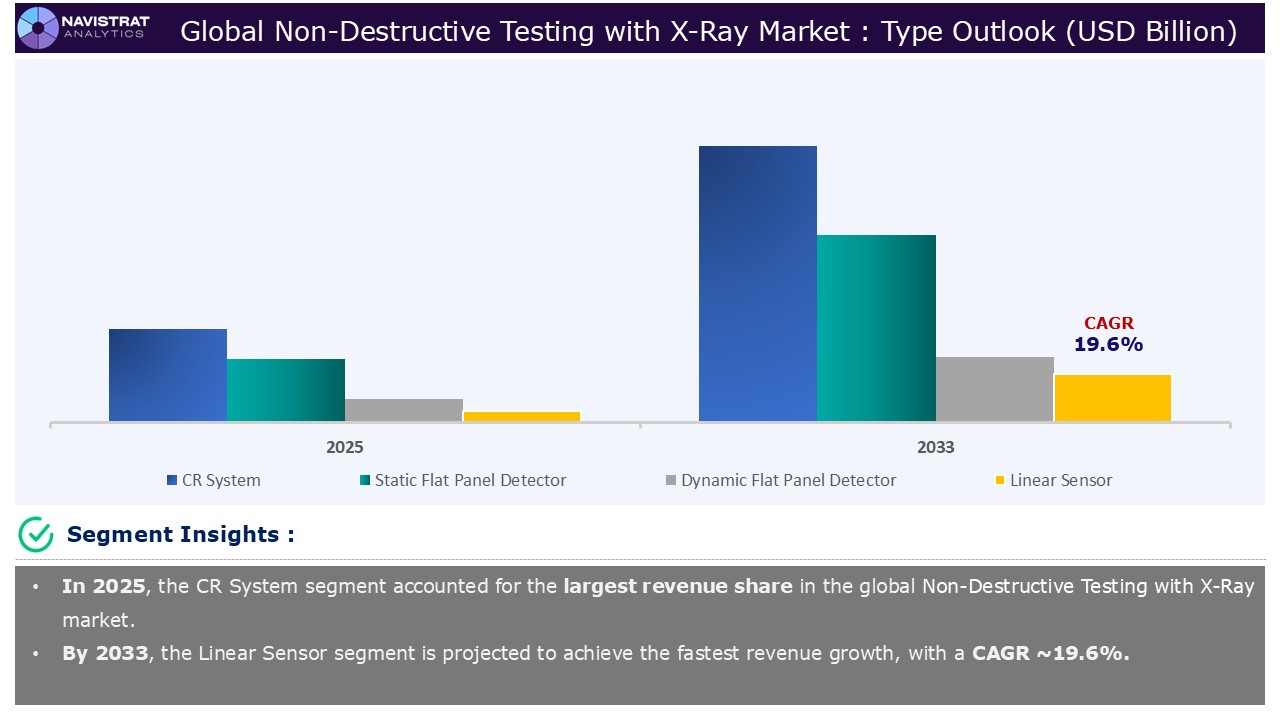
Based on the type, nuclear battery market is segmented into Radioisotope Thermoelectric Generators (RTGs), betavoltaic batteries, alphavoltaic batteries, and diamond nuclear batteries.
Radioisotope Thermoelectric Generators (RTGs) segment contributed the largest market share in 2025. Radioisotope thermoelectric generators (RTGs) generate electrical power for spacecraft by converting heat from plutonium-238’s natural radioactive decay into plutonium oxide. The most significant use of RTGs has been in a range of interstellar missions, including a very large variety of space probes launched to the Moon, trips to the outer planets of the Solar System such as Pioneer and Voyager, and, most recently, the robotic rover Curiosity dispatched to Mars.
Radioisotopes have large energy densities, and particular isotopes can generate significant heat energy over lengthy time periods. Because of their extended half-life, RTGs have been used to power interplanetary exploration and interstellar space missions. They are also widely utilized in remote areas of the world where frequent replacement, charging, and maintenance of power sources is challenging.
On December 2025, Perpetual Atomics, a spin-out from the University of Leicester based at Space Park Leicester, the University’s GBP 100 million science and innovation park, and QSA Global have made significant progress in the processing of americium into sealed sources for radioisotope power systems, such as radioisotope heater units (RHUs) and radioisotope thermoelectric generators. This milestone, which follows Perpetual Atomics’ 2024 launch, emphasizes the company’s dedication to integrating technology, strategic relationships, and innovation at the heart of its operations, with a focus on creating deployable, real-world solutions.
Application Segment Insights and Analysis:
Based on the application, nuclear battery market is segmented into aerospace and defense, medical devices, industrial applications, consumer electronics and IoT, and others.
Aerospace and defense segment contributed the largest market share in 2025. Nuclear reactor batteries, commonly referred to as Radioisotope Thermoelectric Generators (RTGs), are nuclear-based power systems that generate electricity by converting heat produced from radioactive decay. They have been widely deployed in space exploration missions, such as the Cassini-Huygens mission to Saturn and NASA’s Curiosity rover on Mars.
Compared to conventional power sources like solar panels and chemical batteries, RTGs offer significant advantages in space applications. Research published in the Journal of Nuclear Engineering and Radiation Science highlights that RTGs can deliver stable and long-lasting power, often for more than a decade. Moreover, their performance remains reliable under extreme temperatures and high-radiation environments, making them particularly suitable for deep-space missions.
On September 2025, Zeno Power and Orano announced a strategic cooperation to ensure a steady supply of americium-241 (Am-241), a long-lived isotope ideal for space power, from Orano’s nuclear fuel recycling facilities. According to the deal, Zeno will invest millions of dollars to gain priority access to huge quantities of Am-241 per year from Orano’s la Hague recycling center in Normandy, France. This partnership with Orano ensures Am-241 for Zeno’s space nuclear batteries while also advancing Zeno’s overall objective to establish a strong nuclear fuel supply chain.
End-Use Segment Insights and Analysis:
Based on the end-use, nuclear battery market is segmented into government and defense, healthcare, telecommunications, and energy, industrial and manufacturing, and others.
Government and defense segment contributed the largest market share in 2025. For various defense missions there is a need for portable and long-lived power sources. Technical advancement has made battlefields more complex and digital with new and advanced technologies that include GPS, radiocommunications, night vision, helmet mounted screens, drones, etc. Such devices and technologies need a sustained and reliable power supplies. Therefore, nuclear batteries serving as continuous sources of power can really be useful in the defense sector. Moreover, nuclear batteries if designed to micro/nano scales can result in compact and light weight modules that can be easily transported and carried by soldiers for their military operations.
On May 2025, Zeno Power, the leading developer of nuclear batteries – radioisotope power systems – for frontier environments, has announced a USD 50 million Series B funding round led by Hanaco Ventures and including Seraphim, Balerion Space Ventures, JAWS, Vanderbilt University, RiverPark Ventures, Stage 1 Ventures, 7i Capital, Beyond Earth Ventures, and others. Zeno has received nearly USD 60 million in contracts from the US Department of Defense and NASA to develop nuclear batteries for critical marine and space applications such as seabed infrastructure, highly maneuverable satellites, and lunar landers.
Geographical Outlook:
Nuclear battery market is strategically segmented by geography to provide a comprehensive understanding of regional market dynamic. Discover demand analysis, emerging trends, and growth opportunities shaping market performance across different region and countries.
Asia Pacific Nuclear Battery Market:
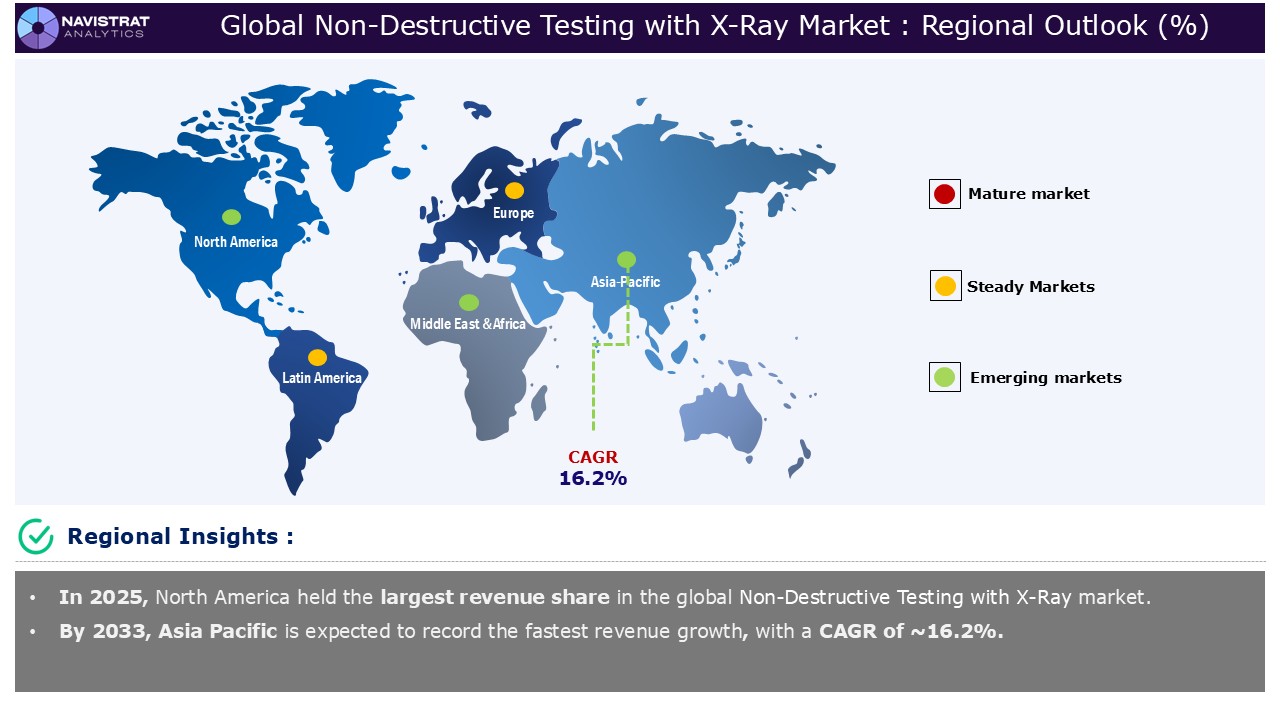
Asia Pacific is registered to have highest market share in nuclear battery market in 2025. This is mainly driven by rapid technological advancement, expanding nuclear and space programs, and rising demand for long-lasting power solutions. Deep space missions and satellites require reliable, long-life power sources, making RTGs highly suitable. APAC region is expanding nuclear power capacity to meet rising energy demand and decarbonization targets. This strengthens the nuclear ecosystem, including isotope production and R&D, which supports the development of nuclear battery technologies.
On March 2025, Chinese researchers have created a carbon-14 (C-14) nuclear battery encased in silicon carbide semiconductor material, representing a significant advancement in nuclear battery technology. The “Candle Dragon One” prototype, developed by Jiangsu-based Beita Pharmatech in partnership with Northwest Normal University, has a theoretical operational lifespan of thousands of years. The battery leverages a composite structure combining radioactive C-14 isotopes with silicon carbide semiconductors. Encasing the C-14 source within a silicon carbide shell ensures full absorption of emitted radiation, eliminating leakage risks and ensuring safe operation.
North America Nuclear Battery Market:
North America is expected to register the fastest growth rate during the forecasted period, driven by demand for long-life power sources, growth in aerospace and defense sectors, and expansion of IoT and sensor networks. The United States, led by NASA and private space agencies is one of the largest users of nuclear batteries for deep space missions, satellites, and planetary explorations. The region is also witnessing rapid demand of nuclear batteries in IoT devices, medical implants, remote monitoring systems, and industrial automation, where long lasting and compact power sources are critical.
On February 2025, Nusano, a physics firm changing radioisotope production, and Atomiq, Inc., a Kronos Advanced Technologies subsidiary that develops and advances nuclear diamond battery technologies and infrastructure, have signed a collaborative agreement. The two businesses will collaborate to create an alpha voltaic and diamond nuclear battery fueled by the decay of alpha and beta emitting radioisotopes included within the battery unit.
Competition Analysis:
Nuclear battery market is characterized by a consolidated structure, with few players competing across various segments and regions. List of major players included in nuclear battery market report are:
- City Labs Inc.
- Infinity Power LLC
- Nusano, Inc.
- GNB Industrial Power
- Arkenlight Limited
- Nuclear Diamond Batteries Inc.
- Forge Nano Inc.
- L3Harris Technologies, Inc.
- Teledyne Technologies Incorporated
Strategic Developments in Nuclear Battery Market:
- In February 2026, the Additive Manufacturing Cooperative Research Centre (AMCRC), announced that in its first sponsored research project, is assisting South Australian nuclear engineering and technology business entX in transitioning its GenX Betavoltaic Power Generator prototype to pre-commercial manufacture. GenX is built around a novel manufacturing technique that combines additive manufacturing, advanced coating, and thin-film deposition, blurring the traditional lines between surface engineering and 3D printing.
- In July 2024, the Korea Atomic Energy Research Institute and South Korean electronic component manufacturer LG Innotek have agreed to collaborate on the development of thermoelectric technology for nuclear batteries used in space and defense applications. KAERI and LG Innotek have signed a memorandum of understanding to collaborate on the development of design, process, and assessment technologies for thermoelectric elements used in nuclear batteries. They will also work together to design, synthesize, and process thermoelectric materials for thermoelectric elements, paving the way for domestic thermoelectric element manufacture.
Key Advantages for Stakeholders:
Navistrat Analytics’ industry report provides an in-depth quantitative analysis of various market segments, historical and current trends, market forecasts, and dynamics within the global market. The historical years covered in this report are 2023 to 2024, with 2025 serving as the base year for market size calculations. The forecast period extends from 2026 to 2033.
The report includes an executive summary and a comprehensive overview of market drivers, restraints, opportunities, and challenges (DROC), along with insights into regulatory standards. It features detailed analyses such as PORTER’s Five Forces, SWOT, and PESTLE, as well as assessments of technological trends and the competitive landscape.
PORTER’s Five Forces analysis helps stakeholders evaluate the impact of new entrants, competitive rivalry, supplier power, buyer power, and substitution threats, enabling them to assess the level of competition and the attractiveness of the global market. The competitive landscape provides stakeholders with a clear understanding of the current market positions of key players, offering valuable insights into their competitive environment.
Scope And Key Highlights Of Nuclear Battery Market Report:
| Report Features | Details |
| Market Size in 2025 | USD 233.8 Million |
| Market Growth Rate in CAGR (2026–2033) | 10.7% |
| Market Revenue forecast to 2033 | USD 529.8 Million |
| Base year | 2025 |
| Historical year | 2023-2024 |
| Forecast period | 2026-2033 |
| Report Pages | 450 |
| Segments covered |
|
| Regional scope |
|
| Country Scope |
|
| Key Market Players |
|
| Delivery Format | Reports are delivered in PDF format via email. |
| Customization scope | Request for Customization |
Nuclear Battery market report offers a detailed analysis of market size, including historical revenue (in USD Million) data for 2023-2024 and revenue forecasts for 2026-2033 across the following segments:
- Type Outlook (Revenue, USD Million; 2023-2033)
- Radioisotope Thermoelectric Generators (RTGs)
- Betavoltaic Batteries
- Alphavoltaic Batteries
- Diamond Nuclear Batteries
- Energy Conversion Outlook (Revenue, USD Million; 2023-2033)
- Low-Power
- Medium-Power
- High-Power
- Application Outlook (Revenue, USD Million; 2023-2033)
- Aerospace and Defense
- Medical Devices
- Industrial Applications
- Consumer Electronics and IoT
- Others
- End-Use Outlook (Revenue, USD Million; 2023-2033)
- Government and Defense
- Healthcare
- Telecommunications and Energy
- Industrial and Manufacturing
- Others
- Regional Outlook (Revenue, USD Million; 2023-2033)
- North America
- U.S.
- Canada
- Mexico
- Europe
- Germany
- France
- U.K.
- Italy
- Spain
- Benelux
- Nordic Countries
- Rest of Europe
- Asia Pacific
- China
- India
- Japan
- South Korea
- Oceania
- ASEAN Countries
- Rest of APAC
- Latin America
- Brazil
- Rest of LATAM
- Middle East & Africa
- GCC Countries
- South Africa
- Israel
- Turkey
- Rest of MEA
- North America
Frequently Asked Questions (FAQ) about Nuclear Battery market report
The market size of nuclear battery market was 233.8 million in 2025.
The market size of nuclear battery market is expected to register compound annual growth rate (CAGR) of 10.7% over the forecast period.
Growth in aerospace and defense sectors, expansion of IoT and sensor networks, technological advancements in materials and semiconductors are major key factors driving the market revenue growth of nuclear battery market.
High development and production costs and regulatory and safety concerns are key limiting factors driving the market.
North America account for fastest revenue growth of 11.7%.
Radioisotope Thermoelectric Generators (RTGs) based is the major leading segment of nuclear battery market in terms of type.
- Market Definition
- Research Objective
- Research Methodology
- Research Design
- Data Collection Methods
- Primary
- Secondary
- Market Size Estimation
- Top-down Model Type
- Bottom-up Model Type
- Forecasting Methodology
- Tools and Models Used
- Market Overview and Trends
- Market Size and Forecast
- Industry Analysis
- Market Driver, Restraints, Opportunity, and Challenges (DROC) Analysis
- Market Drivers
- Demand for long-life power sources
- Growth in aerospace and defense sectors
- Expansion of IoT and sensor networks
- Technological advancements in materials and semiconductors
- Market Restraints
- High development and production costs
- Regulatory and safety concerns
- Market Opportunities
- Diamond and next-generation nuclear batteries
- Space commercialization and private sector involvement
- Miniaturization and micro-power solutions
- Market Challenges
- Ethical and environmental concerns
- Competition from alternative energy technologies
- Regulatory Landscape
- North America
- Europe
- Asia Pacific
- Latin America
- Middle East and Africa
- Strategic Insights
- Porter’s Five Forces Analysis
- PESTLE Analysis
- Price Trend Analysis
- Value Chain Analysis
- Technological Trends
- Betavoltaic and alphavoltaic technologies
- Diamond nuclear batteries
- Nanotechnology and advanced materials
- Miniaturization and micro-batteries
- Advanced radioisotope selection
- Recent Developments
- Funding
- Merger and Acquisition
- Expansion
- Partnership and Collaboration
- Product/ Service Launch
- Type Market Revenue Estimates and Forecasts, 2023-2033
- Radioisotope Thermoelectric Generators (RTGs)
- Betavoltaic Batteries
- Alphavoltaic Batteries
- Diamond Nuclear Batteries
- Energy Conversion Market Revenue Estimates and Forecasts, 2023-2033
- Low-Power
- Medium-Power
- High-Power
- Application Market Revenue Estimates and Forecasts, 2023-2033
- Aerospace and Defense
- Medical Devices
- Industrial Applications
- Consumer Electronics and IoT
- Others
- End-Use Market Revenue Estimates and Forecasts, 2023-2033
- Government and Defense
- Healthcare
- Telecommunications and Energy
- Industrial and Manufacturing
- Others
- Nuclear Battery Market Revenue Estimates and Forecasts by Region, 2023-2033, USD Million
- North America
- North America Nuclear Battery Market By Type, Market Revenue Estimates and Forecasts, 2023-2033, USD Million
- Radioisotope Thermoelectric Generators (RTGs)
- Betavoltaic Batteries
- Alphavoltaic Batteries
- Diamond Nuclear Batteries
- North America Nuclear Battery Market By Energy Conversion, Market Revenue Estimates and Forecasts, 2023-2033, USD Million
- Low-Power
- Medium-Power
- High-Power
- North America Nuclear Battery Market By Application, Market Revenue Estimates and Forecasts, 2023-2033, USD Million
- Aerospace and Defense
- Medical Devices
- Industrial Applications
- Consumer Electronics and IoT
- Others
- North America Nuclear Battery Market By End-Use, Market Revenue Estimates and Forecasts, 2023-2033, USD Million
- Government and Defense
- Healthcare
- Telecommunications and Energy
- Industrial and Manufacturing
- Others
- North America Nuclear Battery Market Revenue Estimates and Forecasts by Country, 2023-2033, USD Million
- United States
- Canada
- Mexico
- North America Nuclear Battery Market By Type, Market Revenue Estimates and Forecasts, 2023-2033, USD Million
- Europe
- Europe Nuclear Battery Market By Type, Market Revenue Estimates and Forecasts, 2023-2033, USD Million
- Radioisotope Thermoelectric Generators (RTGs)
- Betavoltaic Batteries
- Alphavoltaic Batteries
- Diamond Nuclear Batteries
- Europe Nuclear Battery Market By Energy Conversion, Market Revenue Estimates and Forecasts, 2023-2033, USD Million
- Low-Power
- Medium-Power
- High-Power
- Europe Nuclear Battery Market By Application, Market Revenue Estimates and Forecasts, 2023-2033, USD Million
- Aerospace and Defense
- Medical Devices
- Industrial Applications
- Consumer Electronics and IoT
- Others
- Europe Nuclear Battery Market By End-Use, Market Revenue Estimates and Forecasts, 2023-2033, USD Million
- Government and Defense
- Healthcare
- Telecommunications and Energy
- Industrial and Manufacturing
- Others
- Europe Nuclear Battery Market Revenue Estimates and Forecasts by Country, 2023-2033, USD Million
- Germany
- United Kingdom
- France
- Italy
- Spain
- Benelux
- Nordic Countries
- Rest of Europe
- Europe Nuclear Battery Market By Type, Market Revenue Estimates and Forecasts, 2023-2033, USD Million
- Asia Pacific
- Asia Pacific Nuclear Battery Market By Type, Market Revenue Estimates and Forecasts, 2023-2033, USD Million
- Radioisotope Thermoelectric Generators (RTGs)
- Betavoltaic Batteries
- Alphavoltaic Batteries
- Diamond Nuclear Batteries
- Asia Pacific Nuclear Battery Market By Energy Conversion, Market Revenue Estimates and Forecasts, 2023-2033, USD Million
- Low-Power
- Medium-Power
- High-Power
- Asia Pacific Nuclear Battery Market By Application, Market Revenue Estimates and Forecasts, 2023-2033, USD Million
- Aerospace and Defense
- Medical Devices
- Industrial Applications
- Consumer Electronics and IoT
- Others
- Asia Pacific Nuclear Battery Market By End-Use, Market Revenue Estimates and Forecasts, 2023-2033, USD Million
- Government and Defense
- Healthcare
- Telecommunications and Energy
- Industrial and Manufacturing
- Others
- Asia Pacific Nuclear Battery Market Revenue Estimates and Forecasts by Country, 2023-2033, USD Million
- China
- India
- Japan
- South Korea
- Oceania
- ASEAN Countries
- Rest of Asia-Pacific
- Asia Pacific Nuclear Battery Market By Type, Market Revenue Estimates and Forecasts, 2023-2033, USD Million
- Latin America
- Latin America Nuclear Battery Market By Type, Market Revenue Estimates and Forecasts, 2023-2033, USD Million
- Radioisotope Thermoelectric Generators (RTGs)
- Betavoltaic Batteries
- Alphavoltaic Batteries
- Diamond Nuclear Batteries
- Latin America Nuclear Battery Market By Energy Conversion, Market Revenue Estimates and Forecasts, 2023-2033, USD Million
- Low-Power
- Medium-Power
- High-Power
- Latin America Nuclear Battery Market By Application, Market Revenue Estimates and Forecasts, 2023-2033, USD Million
- Aerospace and Defense
- Medical Devices
- Industrial Applications
- Consumer Electronics and IoT
- Others
- Latin America Nuclear Battery Market By End-Use, Market Revenue Estimates and Forecasts, 2023-2033, USD Million
- Government and Defense
- Healthcare
- Telecommunications and Energy
- Industrial and Manufacturing
- Others
- Latin America Nuclear Battery Market Revenue Estimates and Forecasts by Country, 2023-2033, USD Million
- Brazil
- Rest of Latin America
- Latin America Nuclear Battery Market By Type, Market Revenue Estimates and Forecasts, 2023-2033, USD Million
- Middle East and Africa
- Middle East and Africa Nuclear Battery Market By Type, Market Revenue Estimates and Forecasts, 2023-2033, USD Million
- Radioisotope Thermoelectric Generators (RTGs)
- Betavoltaic Batteries
- Alphavoltaic Batteries
- Diamond Nuclear Batteries
- Middle East and Africa Nuclear Battery Market By Energy Conversion, Market Revenue Estimates and Forecasts, 2023-2033, USD Million
- Low-Power
- Medium-Power
- High-Power
- Middle East and Africa Nuclear Battery Market By Application, Market Revenue Estimates and Forecasts, 2023-2033, USD Million
- Aerospace and Defense
- Medical Devices
- Industrial Applications
- Consumer Electronics and IoT
- Others
- Middle East and Africa Nuclear Battery Market By End-Use, Market Revenue Estimates and Forecasts, 2023-2033, USD Million
- Government and Defense
- Healthcare
- Telecommunications and Energy
- Industrial and Manufacturing
- Others
- Middle East and Africa Nuclear Battery Market Revenue Estimates and Forecasts by Country, 2023-2033, USD Million
- GCC Countries
- South Africa
- Israel
- Turkey
- Rest of Middle East & Africa
- Middle East and Africa Nuclear Battery Market By Type, Market Revenue Estimates and Forecasts, 2023-2033, USD Million
- North America
- Market Share Analysis
- Revenue Market Share by Key Players (2024-2025)
- Analysis of Top Players by Market Presence
- Competitive Matrix
- Competitive Strategies
- Mergers and Acquisitions
- Partnerships and Collaboration
- Investment and Fundings
- Agreement
- Expansion
- New Product/ Services Launches
- Technological Innovations
- City Labs Inc.
- Company Overview
- Financial Insights
- Product/ Services Offerings
- Strategic Developments
- SWOT Analysis
- Infinity Power LLC
- Company Overview
- Financial Insights
- Product / Services Offerings
- Strategic Developments
- SWOT Analysis
- Nusano, Inc.
- Company Overview
- Financial Insights
- Product/ Services Offerings
- Strategic Developments
- SWOT Analysis
- GNB Industrial Power
- Company Overview
- Financial Insights
- Product / Services Offerings
- Strategic Developments
- SWOT Analysis
- Arkenlight Limited
- Company Overview
- Financial Insights
- Product / Services Offerings
- Strategic Developments
- SWOT Analysis
- Nuclear Diamond Batteries Inc.
- Company Overview
- Financial Insights
- Product / Services Offerings
- Strategic Developments
- SWOT Analysis
- Forge Nano Inc.
- Company Overview
- Financial Insights
- Product / Services Offerings
- Strategic Developments
- SWOT Analysis
- L3Harris Technologies, Inc.
- Company Overview
- Financial Insights
- Product / Services Offerings
- Strategic Developments
- SWOT Analysis
- Teledyne Technologies Incorporated
- Company Overview
- Financial Insights
- Product / Services Offerings
- Strategic Developments
- SWOT Analysis